|
|

TODAY.AZ / Politics
The inconvenient truth: who actually owns the road through Meghri
29 December 2025 [12:12] - TODAY.AZ

At a meeting with Vladimir Putin in St. Petersburg, Nikol
Pashinyan told the Russian leader about the negotiations with the United States
on TRIPP. Pashinyan said that "bilateral negotiations with the United
States are currently underway in a very constructive way regarding the start of
the implementation and construction of the TRIPP road, and these are really
very big and meaningful changes in our region." At the same time, the
Armenian Prime minister added that "there are many nuances" concerning
the bilateral relations between Armenia and Russia, and it would be necessary
to discuss all this.
What nuances did Nikol Pashinyan talk about? Probably about
those that the Russian side recently reminded Yerevan about.
Mikhail Kalugin, Director of the 4th CIS Department of the
Russian Foreign Ministry, recently expressed the view that if the subsidiary of
Russian Railways, the Southern Railway, has the concession right to manage the
railways of Armenia, then the future "Trump Route" should also be considered
in this logic. In addition, Kalugin recalled, TRIPP will pass most of the
software through the area of responsibility of the Russian border guards. H2,
and we should not forget that Armenia is a member of the EAEU, and it is
obvious that the parties to this project cannot do without Russia.
If you do not take into account one really significant
nuance, which we will discuss below, then the words of the Russian official
contain logic. Indeed, the railways of Armenia are managed by the Southern
Railway, and only this company has had the right to manage the railway network
of this country since 2008. This right is given to the "daughter" of
Russian Railways for thirty years with the possibility of extension. When
signing the concession agreement, Yerevan did not think that the day would come
when everything would change so much that Armenia would try to get rid of the
status of an outpost. This status provided the Armenian side with certain
preferences, including guaranteeing the preservation of the status quo in the
Karabakh conflict. However, despite all the changes, the agreement exists, and
if it is not terminated, the parties must follow it.
After coming to power, Nikol Pashinyan made an attempt to
put an end to the Russian monopoly. At the end of 2018, an investigation into
the activities of SSR was launched, searches were conducted at the company's
offices, and documents were seized. It was stated that the company is suspected
of embezzling $ 60 million. Four criminal cases were initiated against the SSR
- two by the State Revenue Committee, one each by the Investigative Committee
and the National Security Service. In addition, the government was dissatisfied
with the level of modernization that the SSR undertook under the agreement. In
turn, the Russian side countered with the fact that the existing railway
network in the country does not require expansion, as it is not in demand by
the population. The country is small, the population is insignificant, and the
terrain is unsuitable for railway construction. In the end, the Ministry of
Transport of the Russian Federation started talking about the possibility of
Russian Railways leaving Armenia. However, after all the twists and turns, the
situation has calmed down, and the SSR continues to retain the concession right
to the Armenian railway.
Theoretically, Armenia can terminate the agreement with
Russian Railways, but this is a complex legal process that entails possible
financial and legal consequences. For example, Armenia may be obliged to pay
compensation to Russian Railways, cover losses or the purchase price of assets.
Etc.
Given all this, Yerevan cannot simply ignore the Russian
presence on the railway and on the border. In order to start work on the Meghri
section of the Zangezur corridor, Russia must transfer the concession right to
it to Armenia. Pashinyan understands this himself. He was just talking about
this to journalists the other day, however, regarding other roads. These are
roads that Armenia needs, but Azerbaijan does not need. And since Azerbaijan
does not need them, their restoration, in principle, makes no sense, as they
will run into a dead end. We are talking about the
Hrazdan-Dilijan-Ijevan-Gazakh road and the road to the border with Turkiye.
Pashinyan appealed to the concessionaire to restore them as quickly as
possible. Since the SCR did not show much enthusiasm, the Armenian Prime
Minister announced that Armenia was ready to withdraw these sections from
Russian concession management and restore them at its own expense. In other
words, Yerevan understands the concession right of the Russian Railways
subsidiary.
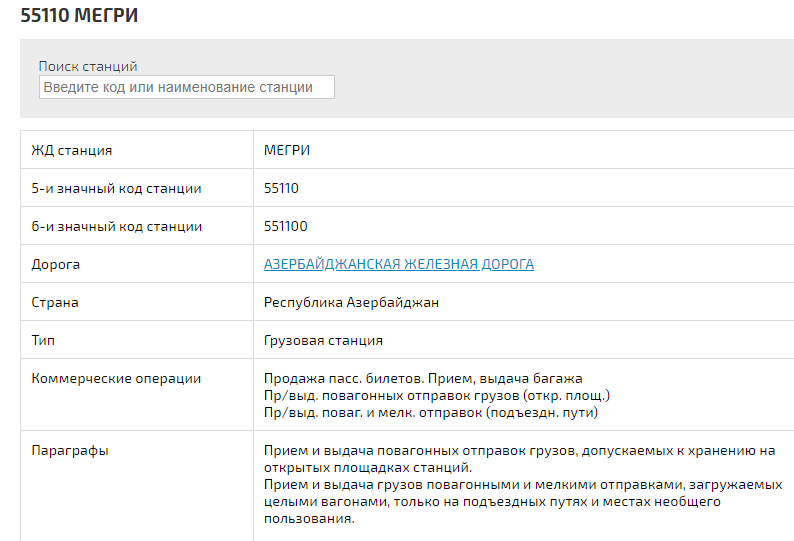
But there is one more nuance, which is very important. The
fact is that the Meghri Railway connecting mainland Azerbaijan with Nakhchivan
has never been operated by Armenian Railways. It was and is the property not of
Armenia or Russia, but of the Azerbaijani Railways. The Meghri railway station
is still listed as belonging to AZHD.
A few days ago, Armenian users shared a video from the
destroyed Meghri station on social networks. The video proudly stated that the
Armenians did not allow the Azerbaijanis to erect a monument to Azizbekov in
front of the station, overnight dragging a bust of Shahumyan from a nearby mine
and placing it on a pedestal. Hatred of Azerbaijanis has always lived in the
Armenian society. In the 70s, at the height of the peoples' friendship,
nationalists also very carefully ensured that no monuments to Azerbaijanis
appeared on the territory of the Armenian SSR.
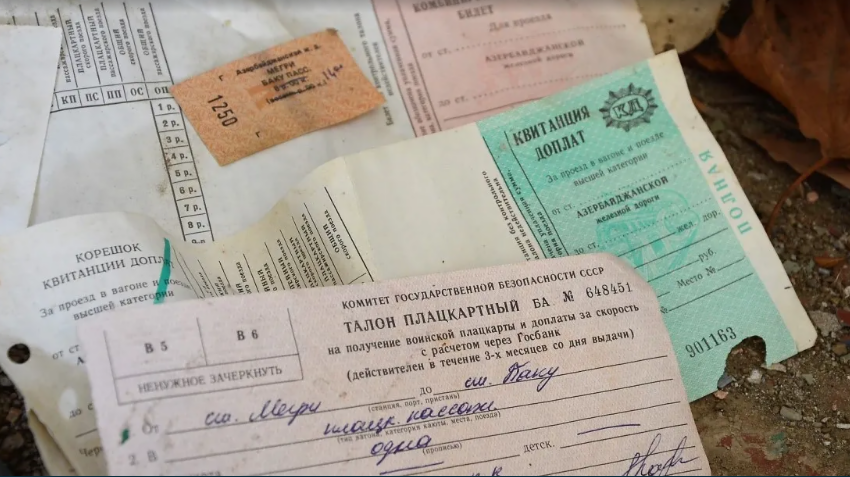
The notorious provocateur Lapshin, visiting the Megri
station in 2019, took these photos, not suspecting what kind of service he
would do us. No one could have imagined then that the issue of the road through
Meghri would return to the agenda.
The video caused outrage among nationalists, who did not like
the fact that the Azerbaijanis were going to erect their monument on the
territory of Armenia. By what right? - they were indignant. But it turns out
that there is a right. The fact is that the Meghri station was the property of
Azerbaijan. The station was opened on a railway owned by AZD, with Azerbaijani
money, and the government of the republic, as the owner, planned to erect a
monument to Meshadi Azizbekov there. Western Zangezur, even after several
deportations and purges, was still an Azerbaijani-populated region, which
served as a source of constant concern and fury for nationalists concerned
about perceived threats to their "identity." Therefore, upon learning
about Baku's plans, the Armenians immediately welded Shahumyan's head and placed
it on a pedestal under cover of night. Of course, no one had to answer for
arbitrariness. Styopa's head was smashed in 1993, and the debris lying on the
ground was so unrecognizable that Russian bloggers who visited this "epic
corner" of Armenia before the war kept getting confused between Shahumyan
and Kamo. It is impossible to blame the Azerbaijanis for this, since they were
expelled from Zangezur even before the Meghri road ceased to function.
The railway through Meghri did not belong to Armenia because
there was no such thing as Armenian Railways before 1991. All roads in Irevan
and other provinces were built before the toponym Armenia appeared on the map
of the region, and in Soviet times the railway network of the Armenian SSR,
with the exception of the Meghri road, was operated by the Transcaucasian
Railway. So, by and large, nothing new happened in 2008. During the years of
self-government - from 1991 to 2008 - the railway network of the newly
independent country fell into complete disrepair, and the concession management
of Russian Railways returned everything to its usual places.
Meanwhile, the Azerbaijan Railway gained independence during
the ADR. And then in 1955, the AJD received the status of an independent
railway within the USSR Ministry of Highways. And it remained so until the
collapse of the Soviet Union, preserving its rights.
It can be learned from open sources that the line through
Meghri, "served by the Azerbaijani Railway, did not transfer to the
Armenian Railway, as it was closed and liquidated in November 1989 in
connection with the Karabakh conflict." But this is the traditional lie of
Wikipedia. The road through Meghri was closed not in 1989, but after the
collapse of the USSR and the outbreak of the First Karabakh War. The last train
passed through Meghri in April 1992.
Until 2008, Armenia's railways remained virtually unattended.
However, as well as all the infrastructure inherited from the past. The
republic itself, accustomed to living at the expense of others and unable to do
on its own, was engaged in destroying what was built during the Soviet era.
Armenian media indicate that by 2003, the railway section from Kapan to Meghri
had been dismantled, and about 70 wagons and dismantled tracks were handed
over, or rather, sold for scrap to Iran. Nikol Pashinyan's government has
initiated an investigation into these facts. It turned out that the vandalism
was carried out with the permission and with the participation of the Ministry
of Defense. The road was dismantled not by some random vandals, but by the
authorities on the direct instructions of Robert Kocharyan. The targeted
dismantling and sale of 40 kilometers of tracks to Iran took only a year. To
break is not to build. The sale was handled by the National Security Service.
As a result, property belonging to Azerbaijan was destroyed
and sold.
In short, the Zangezur corridor, TRIPP, or whatever you want
to call it, is a project that cannot fail to take into account the interests of
Azerbaijan as the legal successor of this line. It continues to be a part of
the Azerbaijani Railways, even if someone does not like it. There were no
documents on the transfer of control to the Armenian side, and no negotiations
were conducted. These facts should be taken into account not only by the
neighbors, but also by the concession campaign that manages the Armenian
railways today.
If Yerevan is talking about long-term peace now, it should
not forget about it. The Armenian side destroyed this road itself, and it must
rebuild it itself, taking into account, among other things, Azerbaijani
interests. Armenia owes Azerbaijan more than the value of its entire economy
during the thirty years of occupation. This does not mean that Baku claims the
internationally recognized territory of its neighbor or wants more than it can
give. It's just that Yerevan, its American partners, and its Russian
concessionaires should not forget that Azerbaijan is not just one of the
countries that will use communications through Meghri, strictly following
Armenian laws. This is a country that has much more rights in this project than
anyone else.
URL: http://www.today.az/news/politics/264470.html
 Print version
Connect with us. Get latest news and updates.
See Also
- 10 October 2026 [16:55]
President Ilham Aliyev and Head of Chechen Republic of Russia have lunch together [PHOTOS] - 10 October 2026 [16:47]
Baku, Jakarta have five cooperation projects, ambassador says - 10 October 2026 [16:14]
President Ilham Aliyev and Head of Chechen Republic of Russia visit Baku White City [PHOTOS] - 10 October 2026 [16:12]
Ramzan Kadyrov reiterates condolences over Baku–Grozny aircraft crash - 10 October 2026 [15:54]
President Ilham Aliyev received Head of Chechen Republic of Russia [PHOTOS/VIDEO] - 10 October 2026 [14:04]
Pakistani PM makes phone call to President Ilham Aliyev - 10 October 2026 [11:52]
Turkmenistan supports holding first Caspian Sea shallowing commission meeting in Azerbaijan in 2027 - 10 October 2026 [11:19]
National Review calls for repeal of Section 907 and stronger US-Azerbaijan ties - 10 October 2026 [11:13]
Azerbaijan appoints judges to several courts of first instance — decree - 10 October 2026 [11:06]
Azerbaijan approves new composition of State Commission on Delimitation and Demarcation of State Border with Georgia
Most Popular
 MEM?M holds seminar with People's Poet Sabir Rustamkhanli
 Russia warns US-backed AI data centre could strain Armenia's electricity supply
 11 commercial ships attacked in and around Strait of Hormuz since early October
 UN Watch condemns Nobel Peace Prize for Navi Pillay over alleged anti-Israel bias
 National Review calls for repeal of Section 907 and stronger US-Azerbaijan ties
 President Ilham Aliyev and Head of Chechen Republic of Russia have lunch together [PHOTOS]
 President Ilham Aliyev meets with President of Iran in Turkmenbashi