|
|

TODAY.AZ / Politics
A correspondence that says more than it seems
21 January 2026 [15:15] - TODAY.AZ

The exchange of letters between US President Donald Trump
and Azerbaijani President Ilham Aliyev is a political signal addressed to
several audiences at once - from the Middle East to Europe and the post-Soviet
space.
The very fact that Azerbaijan is being offered the status of
a founding country of a new international structure, the Peace Council, takes
Baku far beyond its regional role. We are talking about joining a narrow circle
of States that form the architecture of a new international mechanism for conflict
resolution.
What could be more important in a situation where the
current world order has been completely destroyed - and, apparently,
irrevocably?
Trump's letter is emphatically personalized. The US
President appeals not only to the state, but also to the personal political
weight of President Ilham Aliyev, inviting him to join the initiative, which
has already received the approval of the UN Security Council and the support of
key players in the Middle East and Europe.
This is a recognition that Azerbaijan is perceived today as
a responsible and independent actor capable of participating in conflict
resolution far beyond the borders of the South Caucasus.
President Ilham Aliyev's response, in turn, is extremely
precise.
The Azerbaijani leader's letter clearly states the main
thing: participation in the Peace Council is seen as a confirmation of the
strategic partnership with the United States, and as recognition of
Azerbaijan's role in promoting international stability.
Accepting the invitation in Davos, a venue where the global
agenda is traditionally shaped, only reinforces the symbolism of this step.
It is also important that Baku directly links its
participation in the Peace Council with the mission to resolve the conflict in
Gaza. Azerbaijan consciously assumes political responsibility in one of the
most sensitive and complex regions of the world, demonstrating its willingness
to be a part of the solution.
Taken together, this correspondence reflects a deeper
process: Azerbaijan is becoming even more entrenched in the role of a state
whose opinion is taken into account not only in the region, but also in global
politics. And this is perhaps the main conclusion that should be drawn from
these letters, regardless of the wording and diplomatic language.
URL: http://www.today.az/news/politics/264979.html
 Print version
Connect with us. Get latest news and updates.
See Also
- 06 August 2026 [15:15]
Who is Ishkhanyan trying to intimidate from behind bars? - 06 August 2026 [12:12]
Corridors and Fantasies: Why Armenia needs to hurry up with TRIPP - 05 August 2026 [13:13]
Formula for Stability: Stronger Azerbaijan Means Stronger Peace - 04 August 2026 [19:00]
Gyumri base becomes flashpoint in Armenia’s Russia recalibration - 04 August 2026 [15:27]
Corsican question exposes contradictions in France’s rights diplomacy - 04 August 2026 [13:13]
Moment of Truth for Iran: waiting for the Caspian Summit - 03 August 2026 [11:11]
Armenian Railway Crisis: TRIPP and Real sovereignty - 01 August 2026 [11:58]
President Ilham Aliyev sends congratulatory letter to President of Swiss Confederation - 01 August 2026 [10:28]
Azerbaijan, Türkiye agree to accelerate key regional energy corridor projects - 01 August 2026 [09:06]
President Ilham Aliyev's social media accounts shared post on Azerbaijani Alphabet and Azerbaijani Language Day
Most Popular
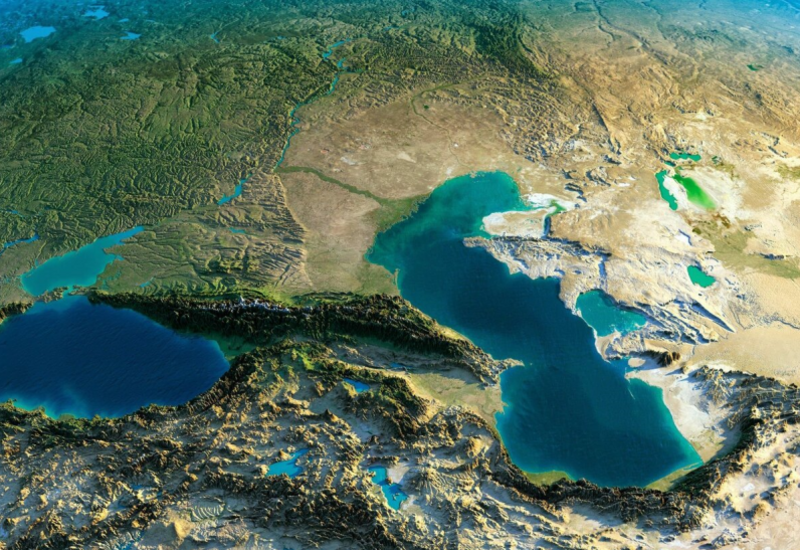 Moment of Truth for Iran: waiting for the Caspian Summit
 Jackie Chan arrives in Baku for filming of new adventure movie
 “New Spider-Man breaks Avengers’ first-day box office record”
 Azerbaijan, Armenia reach de facto peace, Jeyhun Bayramov says
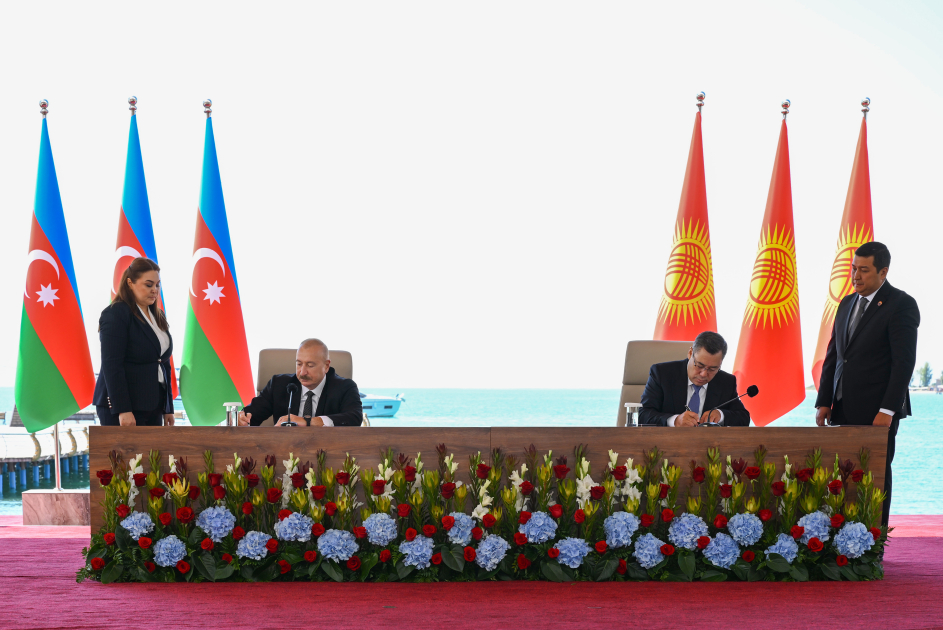 How Azerbaijan–Kyrgyzstan alliance reshape geopolitical map of Middle Corridor?
 ArcelorMittal and Microsoft advance cloud innovation
 Australia to tax tech giants over media payments