|
|

TODAY.AZ / Politics
Battle for Armenia shows how Kremlin’s imperial strategy evolving
30 May 2026 [18:35] - TODAY.AZ
 By Akbar Novruz
When Russia wants to remind a neighbour of its dependence, it reaches for the fruit bowl. Recently, the Russian consumer safety regulator, known as Rospotrebnadzor, decided to stop Armenian flowers, fruits, vegetables, mineral water, and cognac from entering Russia because of certain quality-related and phytosanitary violations, which, by sheer coincidence, happened to appear shortly before Armenia's legislative elections on June 7th. It sounds familiar because Rospotrebnadzor has been using similar bans every time Georgia has moved closer to joining the EU.
The proximate cause of Moscow's irritation is Nikol Pashinyan, Armenia's prime minister since the 2018 "Velvet Revolution." In the last eight years, he has moved his country towards closer engagement with the West, developing relations with the European Union and the US, while letting those with the Russian-led CSTO and EaEU deteriorate. In a recent comment to the Armenians, Secretary of Russia's Security Council Sergei Shoigu noted that their country's economic growth rate over 2022-2025 had reached 40%, largely due to business deals with Russia, while up to 98% of all Armenian agricultural goods go to Russia.
Moscow is exerting every lever short of the military ones it deployed in Georgia and Ukraine, an acknowledgment, perhaps, that those options carry costs it is no longer eager to bear.
Kremlin's billionaire on a string
Economic pressure is just one side of the Russian strategy. According to documents published by the Dossier Centre, which is operated by Mikhail Khodorkovsky, the former head of Russian oil company Yukos and now a Russian opposition exile, there is a highly sophisticated plan devised by the Kremlin to have a compliant government in power in Yerevan. This plan relies mainly on Samvel Karapetyan, who was born in Russia and is the second most popular political personality among voters, with some 12% popularity. He was classified as an agent of the information centre of the Russian intelligence service, the FSB, since 2006 in Russian databases, an indication that he was either an informant or a foreign national.
The Kremlin’s strategists responded. A new track emerged with Arman Tatoyan, a reputable former ombudsman for human rights, who formed a political party known as "Wings of Unity" in April 2026. Documents that were leaked reveal that his strategy was developed by the same Russian political agency involved in the design of Karapetyan’s strategy. His rhetoric was skillfully tuned: portray himself as being "pro-Armenian" but not pro-Russian; refer to Russia as “reality” owing to the Armenian need for gas imports; and importantly, do not call for going back to the CSTO and don’t attack Russia itself. The target audience was set at 10% by March; he failed to achieve this goal, only getting 7.8%.
And here is the 'influence toolkit' in short:
- Bans on fruit, vegetable, flower, mineral water, and cognac imports
- Threat of higher natural gas prices (currently $177.5 per 1,000 cubic metres)
- Covert campaign financing for at least two opposition candidates
- Pro-opposition coverage on Russian state television
- Amplification of the "Western Azerbaijanis" issue to destabilise Pashinyan
- Leaked maps showing violations of Azerbaijan's territorial integrity
The final act, according to the 'leaked plan', would be an election victory followed by the formation of a coalition government comprising Karapetyan and Tatoyan. While Tatoyan will supply legitimacy and moderation, Karapetyan will be responsible for geopolitics and economics. This anti-Pashinyan coalition will be free of any past association with the corrupt "Karabakh clan," headed by the former President of Armenia, Robert Kocharyan, and his allies, who, according to the Armenian view, were responsible for both the corruption in Armenia and its recent defeat in the Nagorno-Karabakh war. An independent Russian investigative report published by the journal The Insider revealed new details about Karapetyan’s links to the Russian Kremlin through its agencies, such as Gazprom, which had supplied him with a French Riviera property earlier owned by Alina Kabaeva, a prominent Russian politician known to be Putin’s girlfriend.
Pashinyan has not been that passive as well; he sent a team to Moscow to scrutinize the embargoed products and mentioned in his statement that Russia had used embargoes against Armenia "dozens of times" within the last eight years. The speaker of the Armenian parliament did not hesitate to threaten that Armenia would quit both CSTO and EaEU if the price of natural gas was increased by Russia. However, according to the latest polls, the Civil Contract party led by Mr Pashinyan is ahead with about 35% votes, while his opponent, Karapetyan, has gained only half of that number.
Interesting approach, there I say, Russia has chosen a different tactic than it used in Georgia and Ukraine. It wants to reconquer Yerevan democratically, or at least with the appearance of democracy.
Washington got something to say as well, it seems....
Given the fact that the war in the Gulf did not end in a decisive conclusion, we could easily say that analysts, and who knows, even high-level politicians, were 'breaking out in cold sweat' regarding the US operation in Iran. And into this volatile political situation walked Marco Rubio, the U.S. Secretary of State, arriving in Yerevan on May 26th, which happens to be the date of this piece. The trip, including the signing of documents by both parties, is a clear indication that the Americans back Mr. Pashinyan in advance of the voting. And it serves as a reminder that the battle for the hearts of Armenians is fought not only by Yerevan and Moscow but by two different paradigms of life after the fall of the USSR – one based on blackmail and deal-making, the other offering partnership and integration.
The Armenian strategy of Russia constitutes a part of a larger strategic dilemma. With its reputation depleted after using military coercion against Ukraine and Georgia, Moscow is trying to illustrate that its previous colonies have a free choice to support it through the ballot box without resorting to bombarding their cities. Whether this different style indicates any strategic reconsideration or simple exhaustion remains to be seen. What is certain, however, is that this exercise in Armenia, as evident from the leaks, is neither spontaneous nor cheap, and that it is, so far, losing.
URL: http://www.today.az/news/politics/268079.html
 Print version
Connect with us. Get latest news and updates.
See Also
- 10 July 2026 [14:14]
Armenian Gold Bubble: The Anatomy of 10 billion Dollar Scheme - 10 July 2026 [10:43]
Azerbaijan Defense Minister meets Baykar Chairman Selçuk Bayraktar to deepen defense cooperation - 08 July 2026 [11:08]
President Ilham Aliyev receives Deputy Prime Minister of Jordan - 07 July 2026 [14:14]
Azerbaijan as crossroads of roads and interests - 07 July 2026 [11:22]
President Ilham Aliyev receives member of U.S. Senate Foreign Relations Committee - 06 July 2026 [15:43]
Azerbaijan facilitates new 1,026-ton propane transit to Armenia - 06 July 2026 [15:15]
Mandate is more expensive than principles: Kocharyan abruptly changed his mind - 06 July 2026 [13:25]
President Ilham Aliyev sends congratulatory letter to President of Malawi - 06 July 2026 [12:12]
Fakes and mathematics - where do Armenian myths come from? - 03 July 2026 [14:50]
US economist Jeffrey Sachs visits Baku, holds talks with Hikmet Hajiyev
Most Popular
 Drone strikes target oil storage facilities in Russia's Tver and Stavropol regions
 Armenia detains another opposition member
 Azerbaijan holds first master's thesis defenses in cultural law
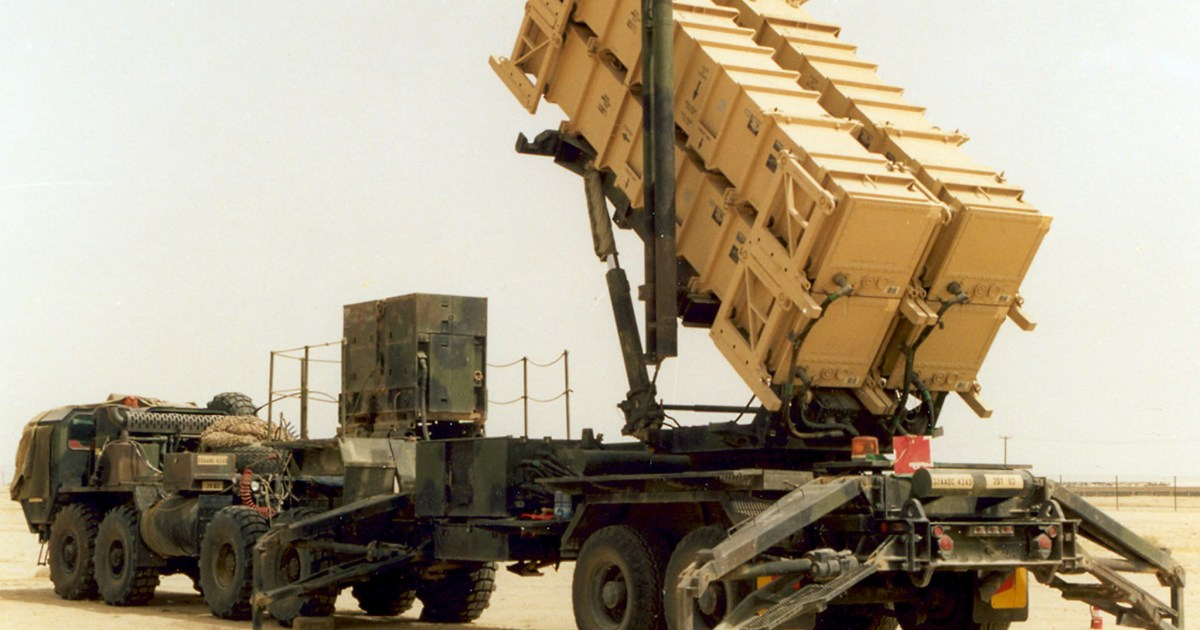 Iran claims drone strikes on US Patriot system in Kuwait
 Vagif Poetry Days to take place in Gazakh and Shusha
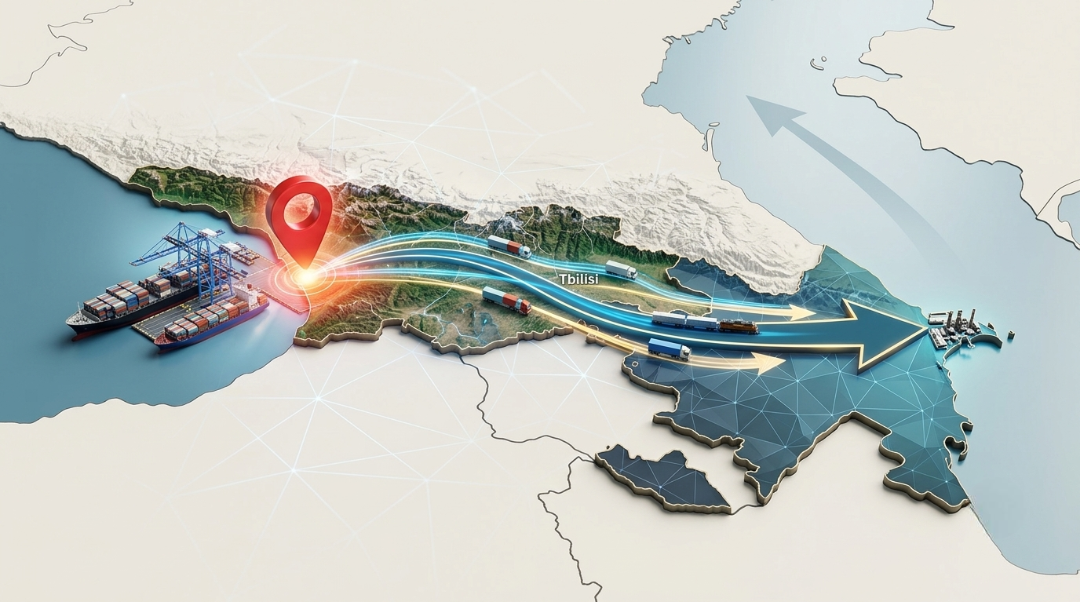 Georgia's Anaklia shift opens door to new investment and stronger Middle Corridor
 U.S. Secretary of Defense Pete Hegseth to hold high-level talks in Israel amid F-35 concerns