|
|

TODAY.AZ / Society
Situation with African swine fever epidemic is under control
22 August 2012 [16:11] - TODAY.AZ
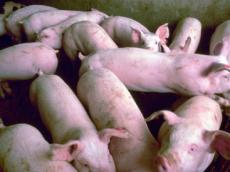 The situation with African swine fever epidemic in Azerbaijan is now under control and currently not a single case of the disease has emerged, head of the press service of the State Veterinary Service under the Ministry of Agriculture of Azerbaijan Yolchu Khanveli told Trend on Wednesday.
The Food and Agriculture Organisation (FAO) has warned about the presence of the epidemic threat of African swine fever in the Caucasus region. Main FAO veterinarian Juan Lubroth said a review of recent cases in the Caucasus show that the region can expect new outbreaks of swine fever in the near future.
In this regard, the State Veterinary Service of Azerbaijan said the situation in the country is stable. Moreover, the number of pigs in the country is low. However, African swine fever is a viral disease and no one can guarantee that this disease does not make itself felt in Azerbaijan.
"Wild boars can pass the border and infect healthy pigs which are not in enclosed spaces, so the entrepreneurs and farmers have to be very careful and keep their pigs indoors to avoid contact with wild animals and also not to eat the meat of dead animals" Khanveli said.
He recalled that a previous outbreak of African swine fever resulting in a number of animals being killed and their owners compensated by the state in 2008, was recorded in the Gabala region despite the measures taken.
Khanveli noted that monitoring for the presence of African swine fever in potentially dangerous areas of Azerbaijan was conducted in January-May 2011.
"Basically, it is the northern regions of Azerbaijan - Gabala, Gakh, Sheki, Oguz and others and then there were no cases of the fever," he said.
He added that such monitoring was not carried out this year because it was not necessary, but if it is, then of course, it will be carried out.
"We always keep in touch with regional offices of the State Veterinary Service of Azerbaijan, especially in potentially dangerous areas," Khanveli said.
According to the FAO, in addition to the Caucasus, the risk of African swine spreading also exists in other parts of Eastern Europe and Central Asia. They include Moldova, Latvia and Kazakhstan, where farms have large number of pigs, but where there is weak control of the epizootic situation.
The FAO recalled African swine fever virus is not transmitted to humans, but is a greater threat to livestock. In 2011, about 300,000 pigs died or were destroyed as a result of outbreak of the disease in the southern parts of Russia resulting in damage to agriculture estimated by experts at $240 million. The geographical spread of the epidemic was rather wide - from Chechnya and Kabardino-Balkaria to the Rostov region.
The virus showing itself this summer is down to an outbreak recorded in Tver, Russia in July.
African swine fever (Montgomery disease) was first recorded in 1903 in South Africa. Under natural conditions, domestic and wild pigs are susceptible to the disease.
/Trend/
URL: http://www.today.az/news/society/111446.html
 Print version
Views: 1662
Connect with us. Get latest news and updates.
See Also
- 26 September 2026 [15:34]
Azerbaijan’s tourism sector becomes more attractive to long-term investors - 25 September 2026 [14:28]
Azerbaijan, Turkmenistan highlight stronger interparliamentary ties - 25 September 2026 [14:06]
Azerbaijan’s aviation units participate in "Power of Unity – 2026" exercise - 24 September 2026 [12:24]
Azerbaijan, Dominican Republic deepen institutional cooperation - 24 September 2026 [12:03]
Azerbaijan, Mali sign MoU to strengthen political dialogue - 24 September 2026 [11:26]
Baku and Baghdad discuss regional cooperation ahead of key summits - 24 September 2026 [11:10]
Alena Aliyeva visits center for children with special needs - 24 September 2026 [10:55]
Alena Aliyeva visits Specialized Educational Institution No. 3 - 24 September 2026 [10:00]
IV Baku Security Forum brings together security chiefs from over 100 countries - 24 September 2026 [08:00]
Azerbaijan, US discuss strategic ties as Bayramov meets Congressman Wilson
Most Popular
 Iron Heart of Azerbaijan
 Alena Aliyeva visits center for children with special needs
 Formula 2 opens Azerbaijan Grand Prix weekend
 Baku streets ready for Azerbaijan Grand Prix
 Alena Aliyeva visits Specialized Educational Institution No. 3
 First Day of Azerbaijan Grand Prix: Speed Battle at Baku City Circuit
 Azerbaijan, Dominican Republic deepen institutional cooperation