|
|

TODAY.AZ / Politics
Three countries, one course: how the alliance of Baku, Ankara and Tbilisi is strengthening
09 June 2026 [13:13] - TODAY.AZ
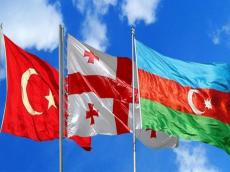
The 10th anniversary meeting of the Foreign Ministers of
Azerbaijan, Turkiye and Georgia, held in Istanbul on Monday, is a much more
important event than it might seem at first glance. Formally, this is a regular
meeting of the trilateral cooperation mechanism in force since 2012. However,
in the current geopolitical conditions, this format is actually becoming one of
the most important components of the new architecture of transport, energy and
economic security in Eurasia.
Against the background of the ongoing transformation of the
global economy, growing tensions between the leading centers of power and
changes in traditional logistics routes, the South Caucasus is becoming one of
the most sought-after regions in the world, where the interests of Europe and
Asia intersect.
Following the meeting in Istanbul, the Foreign Ministers of
Azerbaijan, Turkiye and Georgia signed the Istanbul Declaration. The document
was signed by Turkish Foreign Minister Hakan Fidan, Georgian Deputy Prime
Minister and Foreign Minister Maka Bochorishvili and Azerbaijani Foreign
Minister Jeyhun Bayramov.
According to the Azerbaijani Foreign Ministry, in the declaration the sides confirmed mutual support for sovereignty, territorial integrity and inviolability of borders, stressed the importance of strengthening cooperation in the fields of transport, energy and trade. Special attention was paid to the role of the Baku-Tbilisi-Ceyhan and Southern Gas Corridor pipelines in Europe's energy security, as well as the importance of the Middle Corridor and the Baku-Tbilisi-Kars railway line. The sides also did not forget to emphasize the importance of regional peace, security and stability for the full potential of the South Caucasus.
The implementation of all the tasks outlined in the declaration
largely depends on the cooperation and efforts of Azerbaijan, Turkiye and
Georgia.
When the format was just being created, the South Caucasus
was not yet perceived in its current role. It was considered just a small
region, for which the centers of power fought with alternating success, having
no voice and unable to make drastic decisions. However, there have been many
changes in the Eurasian space in recent years. Unfortunately, they were
negative, but it was precisely these processes that made it possible to
demonstrate the capabilities of a region that has so far been little noticed by
external players. The end of the Karabakh conflict, in addition to geographical
advantages, added stability to the South Caucasus, further raising it in the
preference rating.
The South Caucasus and its connection with Turkiye proved to
be an indispensable alternative to both the northern and southern Eurasian
routes. The Middle Corridor (Trans-Caspian International Transport Route,
TMTM), which was previously considered only as a reserve player against the
background of the Europe-Asia corridor through Russia and international
maritime corridors, has now come to the fore. With the outbreak of Russia's war
with Ukraine and especially in connection with the recent conflict in the
Middle East and the closure of the Strait of Hormuz.
Suffice it to recall that in the first ten days of the war
against Iran alone, the demand for container shipments along the Middle
Corridor increased by 450-500 percent compared to the same period last year.
Due to the sharp increase in cargo traffic in the ports of Aktau and Baku, the
cargo handling time has tripled. The demand for BTK has increased by 35 percent
in the current geopolitical crisis. In this regard, the launch of the Georgian section
of the railway corridor is very important, as well as Turkiye's accelerated
construction of a continuation of the BTK on its territory.
Azerbaijan, Turkiye and Georgia are the main states that ensure the functioning of the main section of the Middle Corridor. They maintain East-West connectivity in the era of the breakdown of traditional logistics routes.
This format attracts attention because the participating
countries are engaged in practical activities. Every meeting has practical
consequences. Unlike many regional platforms dominated by political
declarations, cooperation between Azerbaijan, Turkiye and Georgia is based on
specific infrastructure projects. This is very important in an environment
where there is no time for long discussions. Decisions need to be made quickly
and implemented quickly. The world is changing, and the advantageous geography
of our region gives it a chance.
The combined economies of Azerbaijan, Turkiye and Georgia
currently exceed $1.5 trillion, and trade between them is showing steady
growth. Turkiye is one of the largest trading partners of Azerbaijan and
Georgia, and Azerbaijan remains one of the largest investors in the Turkish
economy. There is no need to even talk about the importance of partnership with
Azerbaijan and Turkiye for Georgia.
Foreign analysts recognize that the
Azerbaijan-Turkiye-Georgia format is one of the few examples of successful
regional cooperation. It is stable, all problems within it are solved quickly,
and decisions are made regardless of the foreign policy situation. Turkiye is
striving to strengthen its position in the South Caucasus, and it is
succeeding. Azerbaijan is the initiator and driving force behind all projects
involving its partners in the format. For Georgia, participation in the trilateral
format provides additional guarantees of economic stability, which contributes
to strengthening its political independence.
In short, the Azerbaijan-Turkiye-Georgia trilateral format is
gradually shaping the new economic geography of the South Caucasus. Perhaps in
the future, the format will become four-sided, when Armenia will be able to
join it after the establishment of final peace.
By the way, Istanbul also talked about the TRIPP project,
which is part of the Zangezur Corridor, which will pass through Armenia.
URL: http://www.today.az/news/politics/268303.html
 Print version
Connect with us. Get latest news and updates.
See Also
- 23 August 2026 [18:48]
"Eternal Friendship" portrays new language of Azerbaijan-Uzbekistan alliance [OPINION] - 23 August 2026 [18:28]
Presidents Ilham Aliyev and Shavkat Mirziyoyev attended inauguration and groundbreaking ceremony for Azerbaijani projects in Uzbekistan [PHOTOS] - 23 August 2026 [16:41]
Tashkent hosted third meeting of Supreme Interstate Council of Azerbaijan and Uzbekistan [PHOTOS/VIDEO] - 23 August 2026 [16:30]
President of Azerbaijan Ilham Aliyev held one-on-one meeting with President of Uzbekistan in Tashkent [PHOTOS/VIDEO] - 23 August 2026 [16:11]
Azerbaijan awards President of Uzbekistan with Heydar Aliyev Order - 23 August 2026 [15:07]
Hikmet Hajiyev: Azerbaijan-Uzbekistan ties have entered new chapter - 23 August 2026 [15:06]
Official welcome ceremony was held for President Ilham Aliyev in Tashkent [PHOTOS/VIDEO] - 23 August 2026 [14:01]
Baku, Tashkent turning political friendship into economic power [ANALYSIS] - 22 August 2026 [12:10]
Another Russian shipment reaches Armenia via Azerbaijan as transit flows expand - 22 August 2026 [10:02]
Azerbaijan’s new ambassador to Costa Rica presents credentials to President Laura Fernandez
Most Popular
 Tesla recalls nearly 3 million electric vehicles in China over safety risks
 242 tons of Russian propane to reach Armenia via Azerbaijan
 US Department of Justice decides to back Elon Musk in AI nudifying ban lawsuit
 Uzbekistan, Azerbaijan push deeper economic ties at Tashkent regional forum
 US is leaving Iraq as Baghdad faces new fight for sovereignty [COMMENTARY]
 Gaza’s next phase puts Trump, Netanyahu and Hamas on collision course [ANALYSIS]
 North Korea condemns Japan’s record defense budget, warns of regional arms race