|
|

TODAY.AZ / Business
Azerbaijani-born technologist reshaping digital trust in US healthcare
17 November 2025 [11:38] - TODAY.AZ
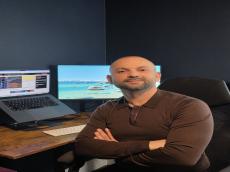
In an era when technology defines how societies function, healthcare has become one of the most critical and sensitive areas of digital transformation. Ensuring that millions of people can safely access medical services, insurance programs, and public health platforms has never been more important.
At the forefront of this transformation stands Tamerlan Mammadzada, an Azerbaijani-born cybersecurity and software quality assurance leader whose work is redefining how the US healthcare system safeguards patient data and public trust.
Mammadzada plays a pivotal role in strengthening State-Based Marketplaces (SBMs) and Medicaid eligibility systems-platforms that millions of Americans rely on daily. Within IdeaCrew, a Washington, D.C.-based technology firm serving federal and state health programs, he has built advanced testing frameworks and cybersecurity practices that ensure both functionality and compliance with rigorous standards such as HIPAA, CMS MARS-E, and NIST SP 800-53.
Beyond his professional responsibilities, Mammadzada is also a published author and framework architect, known for creating the groundbreaking Secure & Compliant Healthcare QA and Penetration Testing Framework. His book, Securing Healthcare Software: A Practical Guide to Functional Testing, Penetration Testing, and Compliance, has gained recognition among industry professionals and solidified his position as a thought leader at the intersection of technology, safety, and public health.
He has also earned international visibility as a judge and expert panelist at major technology competitions such as Code Resurrection: Bringing Digital Ghosts Back to Life 2025 and Cases&Faces, where he evaluates emerging global innovations in cybersecurity and software development.
Over the past decade, Mammadzada has become one of the influential voices shaping how technology, security, and public trust intersect. His journey-from his beginnings in Baku, Azerbaijan, to leadership roles across North America-reflects both personal achievement and the rise of Azerbaijani expertise in global innovation.
In this interview with Azernews, Mammadzada shares how he built his career, why cybersecurity in healthcare is about more than technology, and how his roots continue to influence his mission of making digital systems safer for everyone.
Q: Tamerlan, your professional journey from Baku to leading major healthcare technology projects in the United States is remarkable. How did it all begin?
A: My story started in Azerbaijan, where I developed an early interest in technology and problem-solving. I was fascinated by how digital systems could improve people’s lives - but I also realized that technology without security could easily harm them. That understanding pushed me to specialize in software quality and cybersecurity. Every step of my career since then has been guided by one goal: to make systems not just functional, but trustworthy.
Q: You’re known for playing a key role in protecting healthcare systems used by millions of people. What does your work focus on?
A: My focus is on strengthening the digital infrastructure that people depend on to access healthcare. These systems process medical records, insurance applications, and personal data every day. If something fails or is compromised, it directly affects real lives - families waiting for coverage, patients needing treatment. My responsibility is to ensure that the technology behind these systems remains secure, reliable, and transparent. It’s not just an IT function; it’s a public responsibility.
Q: How do you balance technology and humanity in a field that is so technical by nature?
A: I always remind my teams that behind every system, there is a person. When a platform fails or is attacked, it’s not just data that’s affected - it’s someone’s healthcare, someone’s peace of mind. That’s why cybersecurity must be seen as an act of protection, not just a technical task. Every secure system is a promise kept to the people who depend on it.
Q: You’ve often said that software quality and cybersecurity should not be treated as separate goals. Can you explain why?
A: In many organizations, quality assurance focuses on whether something works, while cybersecurity focuses on whether it can be broken. If those two teams don’t work together, vulnerabilities appear. I built frameworks that merge them into a single unified process — where every test considers both reliability and protection. It saves time, reduces risk, and builds systems that people can truly trust.
Q: You developed a healthcare security framework used by major State Health Insurance Marketplaces and later published it as a book. What inspired that work?
A: My work has always centered on bridging software quality and cybersecurity - two areas that are often treated separately but are deeply interconnected. Through years of experience in healthcare technology, I saw the need for a unified approach that ensures both functionality and security at every stage. That became the foundation for my book, Securing Healthcare Software: A Practical Guide to Functional Testing, Penetration Testing, and Compliance. Seeing professionals adopt it as a reference has been one of the most rewarding parts of my career.
Q: Beyond the technical results, what do you see as the broader social impact of your work?
A: The true impact is stability and confidence. When systems run securely, people receive their health benefits on time, hospitals share data safely, and governments maintain public trust. Cybersecurity is often invisible, but its outcomes are deeply social - it protects families, ensures fairness, and keeps essential services functioning reliably.
Q: You hold senior memberships in global organizations such as Hackathon Raptors, ISACA, HIMSS, and the Soft Computing Research Society. What do these roles mean to you?
A: They allow me to contribute beyond my daily work - by reviewing research, mentoring engineers, and supporting the development of international standards. It’s also a way to represent Azerbaijan on the global stage. I take pride in showing that our country produces experts who are shaping global technology in meaningful ways.
Q: Looking ahead, what do you think will define the next era of healthcare technology?
A: The next era will be driven by intelligence and adaptability. Systems will not only detect problems but also predict and resolve them automatically. Artificial intelligence will make security more proactive, and continuous validation will replace manual reviews. The goal is to build technology that becomes self-aware enough to protect people in real time - and that’s the future I’m working toward.
Q: Finally, what advice would you give to young Azerbaijani professionals who aspire to work internationally?
A: Never underestimate the power of curiosity and discipline. Growing up in Azerbaijan, I learned the value of hard work and resilience - qualities more important than geography. The world needs ethical, skilled, and visionary engineers. If you lead with integrity and think globally, your work will always find its place on the world stage.
Tamerlan Mammadzada’s journey reflects how one Azerbaijani-born technologist transformed expertise into social impact, building bridges between technology and trust. His career demonstrates that true innovation is not only about systems or code, but about protecting the lives and confidence of the people who depend on them. As healthcare undergoes rapid digital transformation, his story stands as a powerful reminder that global progress often begins with local roots.
URL: http://www.today.az/news/business/263480.html
 Print version
Connect with us. Get latest news and updates.
See Also
- 08 October 2026 [14:55]
Azerbaijan ranks third globally in financial stewardship index - 08 October 2026 [13:16]
Azerbaijan, Türkiye sign memorandum to expand industrial cooperation - 08 October 2026 [12:12]
Azerbaijan explores dual listings to attract foreign investment to capital markets - 08 October 2026 [11:38]
Azerbaijan explores critical minerals logistics cooperation with Dutch C. Steinweg Group - 08 October 2026 [11:20]
President Ilham Aliyev: Azerbaijan's trade turnover with Central Asian countries grew by more than 50 percent last year - 08 October 2026 [08:00]
EIA sees global oil production rebounding sharply in 2027 - 06 October 2026 [15:53]
Azerbaijan and bp expand cooperation through new energy projects - 06 October 2026 [13:44]
Azerbaijan invites German companies to manufacture for wider regional markets - 06 October 2026 [13:38]
Three more HPPs with total capacity of 10.7 MW being built in Azerbaijan’s Lachin - 05 October 2026 [11:14]
Bitcoin price climbs above $86,000 as crypto market advances
Most Popular
 Saudi East-West pipeline flows restored to 5.8M bpd
 Saudi Arabia’s Jizan and Najran airports hit in overnight attacks
 Azerbaijan has gone through chaos that is hard to believe today
 Erdogan condemns weapons in space after US confirms orbital deployment
 Turkiye boosts trade in national currency
 Pashinyan says TRIPP will reshape Armenia and region's economic environment
 World Judo Championships kicks off in Baku