|
|

TODAY.AZ / Analytics
Emerson experts highlight how robotics transforming corrosion monitoring
11 December 2025 [08:30] - TODAY.AZ
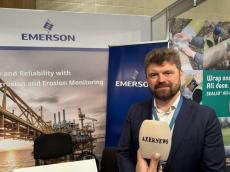
At the Asset Integrity & Corrosion Conference, two experts from Emerson Process Management, Andrey Kharitonov and Bilgehan Karakus, were interviewed about how robotics, drones, and autonomous inspection tools are reshaping corrosion monitoring and safety across industrial facilities.
“We are eliminating manual inspections and enabling true predictivity,” said Andrey Kharitonov during an interview with Azernews.
Question: How are robotics, drones, and autonomous inspection technologies transforming corrosion management in industrial facilities? What benefits do they bring in terms of efficiency and safety?
Responding to the question, Andrey Kharitonov, representing Emerson Process Management, explained that the shift from manual inspection to automated, sensor-based systems has already transformed how operators manage corrosion risks.
“In the past, integrity teams had to physically go into the field and check every asset manually,” he said. “Today, our goal is to eliminate that process as much as possible.”
Kharitonov noted that Emerson now provides ultrasonic, non-intrusive sensors capable of performing continuous corrosion inspections. Because these sensors remain fixed at the same locations, they deliver consistent, comparable data over time. This creates what he described as a fully predictive approach: “By measuring daily or very frequently, we can determine exactly when pipe wall thickness will reach its minimum threshold. That allows us to schedule maintenance proactively, reduce safety incidents, and plan resources effectively.”
Although robotics and drones also support safer operations by keeping human inspectors away from hazardous or explosive areas, Kharitonov emphasized that such tools still require active human supervision. Emerson’s approach, he added, minimizes human involvement entirely by automating data collection and feeding information directly into analytical software that generates alarms and reports.
“This saves a massive number of working hours, improves safety, and enhances integrity. The same technology can be used not only for pipelines but also for tanks and containers containing corrosive liquids,” he said. “Data is valuable only when converted into actions,” Kharitonov added while speaking about integration challenges.
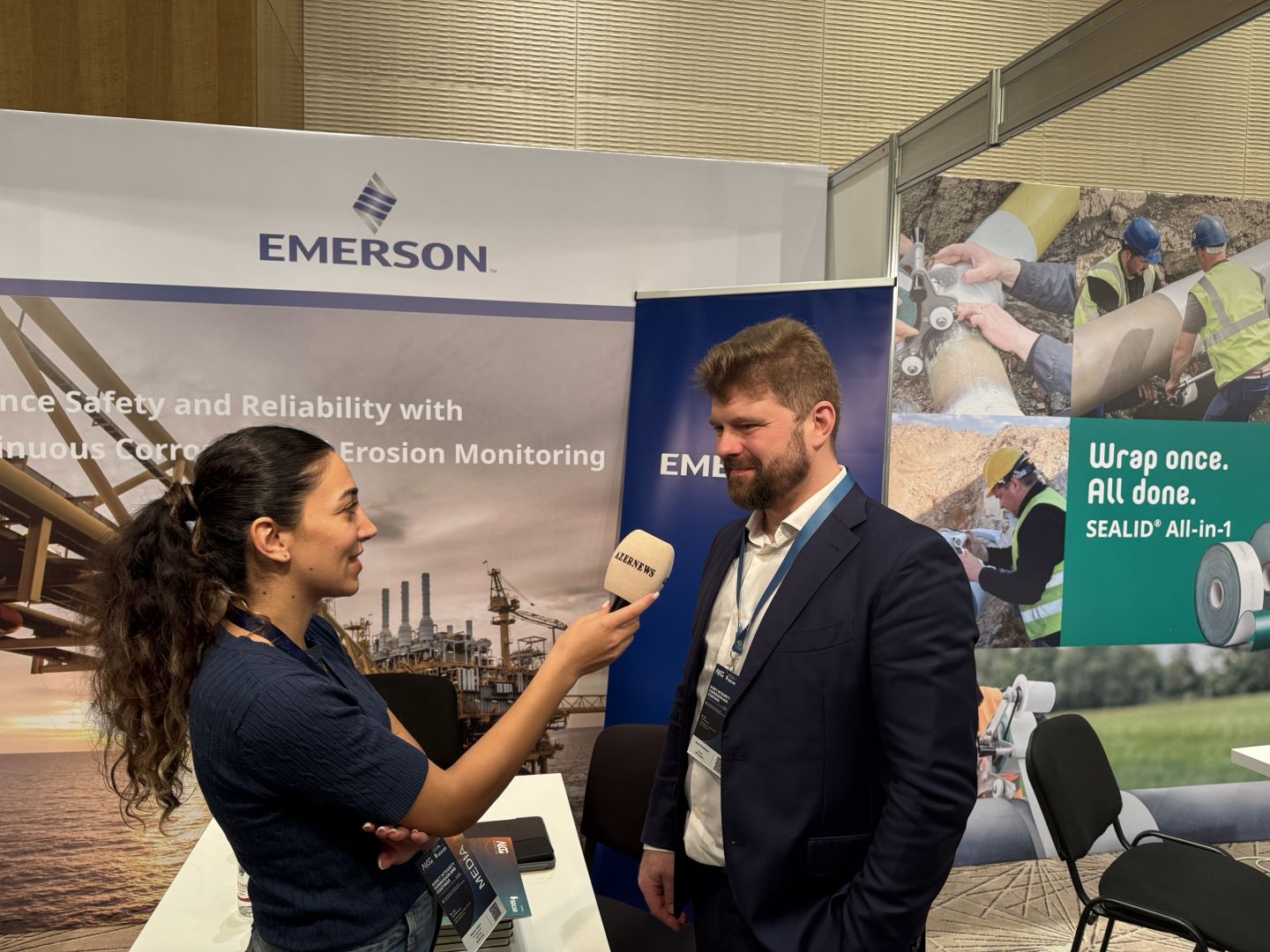
Question: What are the main challenges companies face when integrating autonomous inspection into existing integrity programs?
In his response, Kharitonov said that one of the most common issues is that many companies focus solely on data collection rather than on generating meaningful insights.
“It’s not enough just to measure corrosion,” he explained. “The real value comes when that data triggers corrective actions, injecting inhibitors, scheduling maintenance, or adjusting operations,” he emphasised.
Another challenge, he noted, is underutilized data. Emerson’s corrosion sensors can provide information not only to integrity engineers but also to maintenance teams, yet companies often fail to establish processes to ensure that the right people use the right data.
He highlighted digitalization and integration as ongoing obstacles. Historically, many operators relied on simple 4–20 mA systems, whereas modern sensors now use wireless technologies and advanced industrial protocols like OPC. “Today, technologies have evolved enough to overcome integration problems, but customers still need a clear technology strategy,” he added. Effective corrosion management, he said, requires viewing analytical tools, connectivity, and cybersecurity not as separate elements but as a unified digital ecosystem.
“Drone-based UT measurements will play a bigger role” — Bilgehan Karakus
Question: Looking ahead, which emerging technologies in robotics and drone inspection will have the biggest impact on corrosion monitoring?
Bilgehan Karakus, who oversees IoT sensors for Türkiye and Azerbaijan, said that while Emerson currently focuses heavily on ultrasonic thickness monitoring, drone-based UT inspection will become increasingly important.
“There are many methods to measure corrosion,” he said. “Our ultrasonic thickness sensors provide online, predictive insights. But in some locations — such as very high pipelines or hard-to-reach assets — continuous online monitoring may not be necessary or practical.”
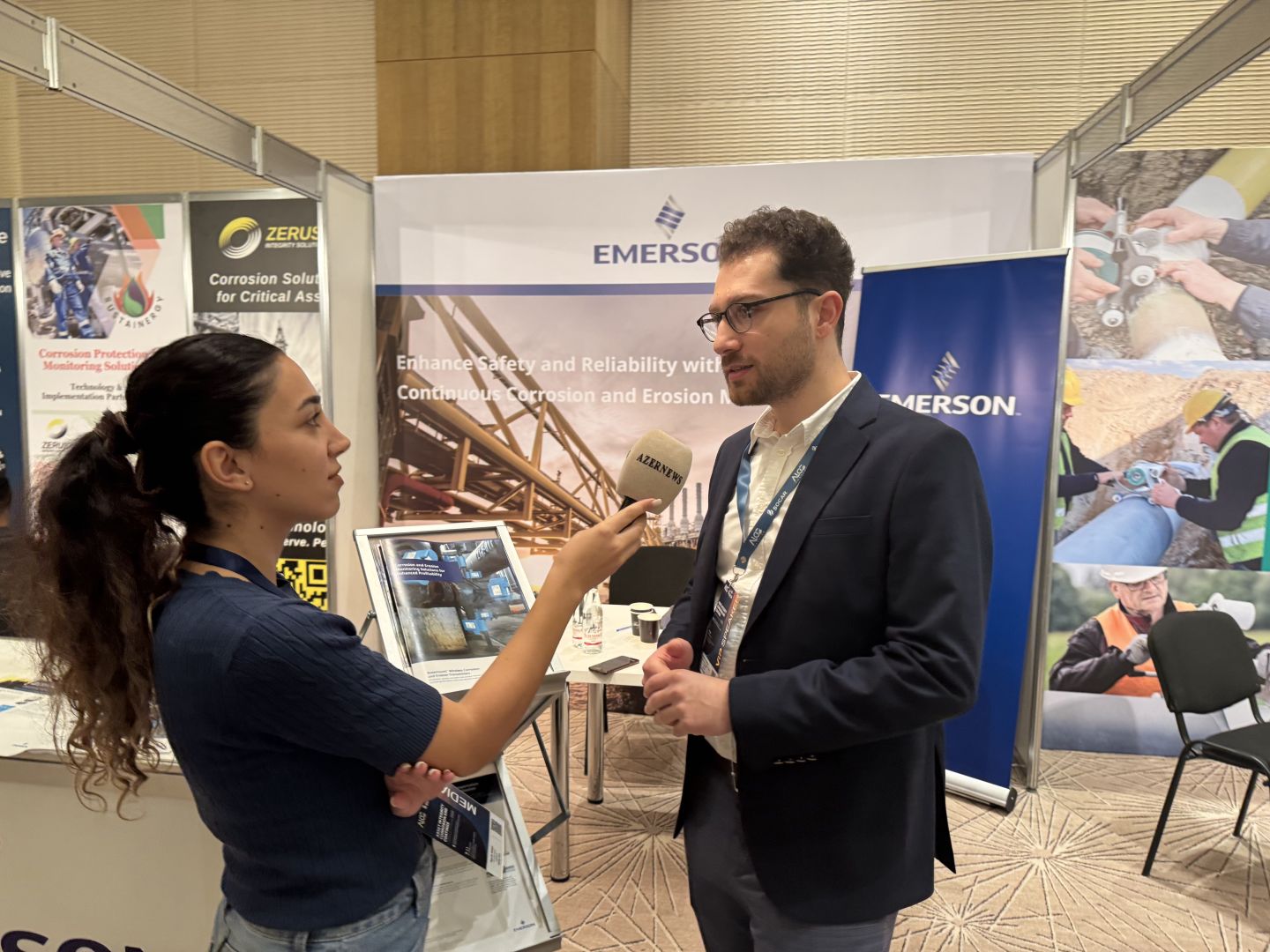
For these cases, he believes drone-based inspection will provide a strong alternative. “If a pipeline is located at height and requires scaffolding for inspection, sending a drone equipped with UT measurement tools will be far more efficient and safer,” he explained.
Karakus added that all advanced monitoring systems serve a common goal: preventing leaks, protecting the environment, and ensuring the safety of workers.
“Dangerous fluids in pipelines and tanks pose serious environmental and personal risks. These monitoring systems help eliminate failures, improve process safety, and safeguard personnel,” he said.
The insights from Emerson’s experts highlight a clear industry shift: from manual and reactive inspection to automated, continuous, and predictive asset integrity management. While drones and robotics will play a growing role, this approach emphasizes autonomous sensors, seamless digital integration, and actionable insights — enabling operators to make faster, safer, and more informed decisions about corrosion risks.
URL: http://www.today.az/news/analytics/264034.html
 Print version
Connect with us. Get latest news and updates.
See Also
- 07 October 2026 [08:30]
Baku, Astana tap Caspian to redraw Eurasia’s digital map - 05 October 2026 [08:30]
Azerbaijan’s post-war strategy is shifting from territory to ideological security - 30 September 2026 [14:37]
Azerbaijan’s Absheron gas project: economics behind $4.2 billion investment - 30 September 2026 [08:30]
Azerbaijan’s digital investment surges as its non-oil economy seeks new growth - 22 September 2026 [23:00]
Polish companies eye opportunities as Azerbaijan builds digital trade route - 22 September 2026 [13:42]
Trump-Xi summit puts AI, trade, rare earths at centre of new US-China contest - 21 September 2026 [14:11]
Azerbaijan’s manat faces global dollar surge with $15 bln buffer - 18 September 2026 [08:30]
Azerbaijan’s cotton growth shifts focus from export volumes to industrial value - 17 September 2026 [13:24]
Azerbaijan's role in South Caucasus's new architecture - 17 September 2026 [08:30]
Germany questions 'associate member' term for Canada
Most Popular
 Suspected plague death triggers quarantine measures in Russia's Irkutsk region
 Estonia moves troops and long-range weapons closer to Russian border
 Bitcoin price climbs above $86,000 as crypto market advances
 Reality that Azerbaijan has created for itself
 President Ilham Aliyev received newly appointed ambassador of Austria to Azerbaijan
 Hormuz Strait disruptions could push grain prices up by 80%, ICC warns
 Bolsonaro takes first-round lead over Lula in Brazil election