|
|

TODAY.AZ / Analytics
Europe’s expanding footprint in Armenia raises old questions
19 April 2026 [15:48] - TODAY.AZ

by Akbar Novruz
There is a restaurant in Tsaghkadzor, a ski resort town an hour north of Yerevan, called Dahook. The restaurant specializes in Armenian food served in a lively setting, and in the last few months, many Europeans in their thirties and forties, all dressed in casual wear and not interested in talking about their office work, have been visiting the place. As Hraparak, a newspaper based out of Yerevan that knows how to embarrass institutions, reports, these individuals are members of the European Union Monitoring Mission to Armenia, and having been paid from a budget of €44 million, they spend most of their time in the saunas, restaurants, and other places in Martuni instead of the six Forward Operating Bases on the border between Armenia and Azerbaijan.
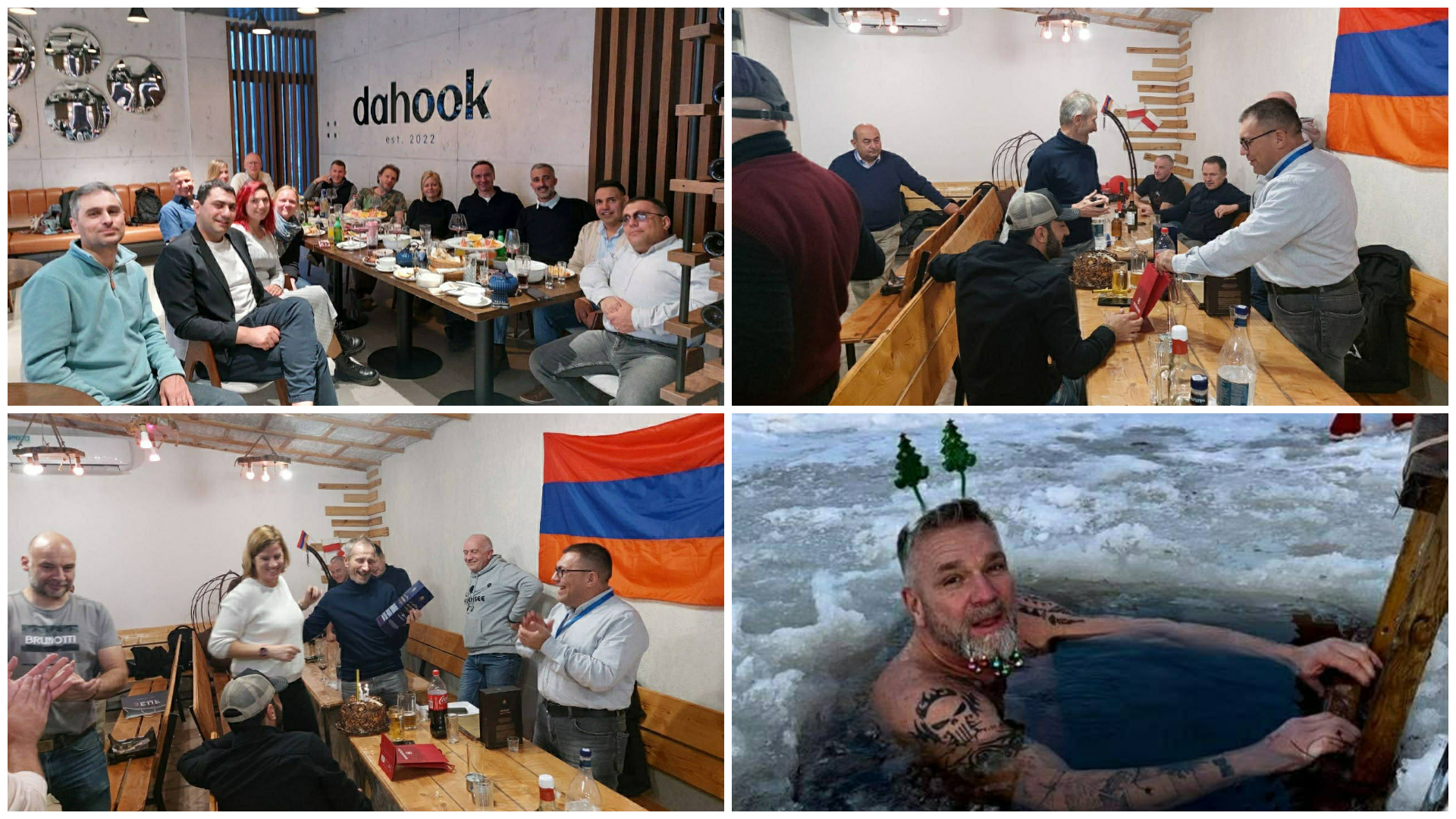
There has been no such dereliction, according to the EU. The mission, launched in February 2023 and extended through 2027 with 209 international personnel, has recorded a genuine deterrent effect: border incidents with Azerbaijan decreased significantly after its deployment. That is a real achievement, and one worth noting before the criticisms. But coming right after the EU ambassadors in Brussels gave their approval, on April 15th, for a second parallel civilian mission to Armenia, the timing of the article in the Armenian newspaper seems to bring up a good point that Brussels still hasn't answered yet.
What Brussels is actually sending?
The fresh mission, known as the European Union Partnership Mission to Armenia (EUPM Armenia), differs both in its mandate and nature from the EUMA mission. While the EUMA mission watches out for threats in the border region through binoculars, the EUPM Armenia mission will work within the ministries of Yerevan and its security forces, providing advice on hybrid threats, cybersecurity, information warfare abroad, and illegal finance flows. It would have around 20-30 officers deployed for two years. Final endorsement is expected at next week’s EU foreign ministers' meeting, where the European Union's foreign policy head, Kaja Kallas, put her case forward.
What a great timing!.. June 7th marks Armenia’s first scheduled parliamentary elections since 2018, which is one of the most geopolitically significant elections in decades. Civil Contract, headed by Prime Minister Nikol Pashinyan, is pitted against not just one, but two, opposition blocs with evident links to Russia – the Strong Armenia Party of Russian-Armenian businessman Samvel Karapetyan, and Armenia Alliance, led by former president Robert Kocharyan and board member of the Russian investment company RCI Holding. As reported by the Russian paper Vedomosti, Sergei Kiriyenko, the Presidential official in charge of overseeing elections in Abkhazia, South Ossetia, and Moldova, has been assigned by Moscow to oversee Russian involvement in the upcoming elections in Armenia. The EU internal justification memo for its mission to Armenia makes no bones about the task: “the assistance should be aimed clearly at reducing and mitigating Russia’s destabilising activities.”
But this actually is not the first time...
Brussels portrays the EUPM mission to Armenia as an example of the Moldova scenario. In 2024, the EU sent about 20 experts to Chi?in?u prior to parliamentary elections, working to identify disinformation and ensure the financial transparency of campaigns. This mission is generally seen, within EU circles, as helping Moldova’s pro-European political majority maintain its majority. As Kallas put it, "Armenia has asked for similar assistance against the malign influence, just like we provided to Moldova." The comparison is quite real and the precedent positive, although it should be mentioned that, unlike Armenia, Moldova does not have any borders with Iran, nor is it currently implementing a peace agreement with a neighbouring state that opposes the involvement of a third country in the area.
The last issue, in turn, is the most sensitive one. The Washington Declaration, signed by Armenia and Azerbaijan in August 2025 and brokered under American patronage, includes provisions on the absence of third-party forces in the bilateral border area. Azerbaijan takes this provision quite liberally, while Armenia narrows it down to the deployment of military forces in question. EUPM Armenia, despite working within the territory of Yerevan instead of the border zone, may still remain unaffected by this clause, but it would certainly operate in the same politically charged environment and provoke the same resentment from Azerbaijan, which has dubbed EUMA "an anti-Azerbaijan propaganda tool."
Which brings the story back to the restaurants and the saunas of Yerevan. The Hraparak analysis needs to be treated with some skepticism because the publication has political leanings and oppositional publications in Armenia have strong motives to discredit EU-linked organizations. The EU refutes this claim outright. Nevertheless, the basic premise here, namely, that missions established in low-intensity conflicts often lose focus on their goals, that international personnel without any enforcement mandate become disillusioned, and thus their mere existence becomes symbolic as opposed to practical, is hardly an extreme position. This is indeed the main criticism of Common Security and Defence Policy (CSDP) civilian missions found in academic critique, which holds true for Georgia, Palestine, Kosovo, and other places. The mission's failure to establish an enforcement mechanism "puts its entire credibility at risk, especially when expectations outrun its actual capacity to act."
The EUPM Armenia, to its credit, is a different type of deployment, advisory, embedded in institutions, focused on cyber and information infrastructure rather than border observation. Perhaps, this kind of work cannot be done from dining tables but requires serious technical engagement with Armenian interlocutors in office settings and data centers. Whether the EU bureaucracy will manage to assemble a 20-30 man team of such experts, especially under the pressure of the Iran conflict, is a reasonable operational issue which, to my knowledge, was never discussed by the ambassadors who authorized the mission.
Regarding this issue, the risks include internal political developments in Armenia, economic pressure from foreign entities, information manipulation, and the possibility of conflict with Iran. Armenia's border with Iran holds strategic importance for its communication lines and the "North-South" transport and trade corridor. Potentially, tension might increase Russia's influence over Armenia's economy and energy sector, especially during elections. It also highlights risks like migration, organized crime, and illegal activities.
So what is actually at stake?
The geopolitics of the Armenian vote in June are far too serious to be managed by an EU civilian mission alone. An electoral win by the pro-Russian opposition bloc(s) would likely mean the end of the trend, not just the peace negotiations with Azerbaijan, but also the visa facilitation talks with the EU and even the opening toward Türkiye. This would make Armenia another Georgian neighbor of the West that finds itself on the wrong side of a major divide in the region. Hopefully, the EU understands this perfectly. It has committed €200 million ahead of the elections, with Kallas coming along herself.
If done right, with experts who can distinguish between a fake media website and an opposition media outlet, and who recognize that dismissing all domestic criticism as “hybrid warfare” is itself a means of undermining democracy, it might serve as a small but valuable addition. If done wrong, it will become a metaphor for the European Union’s habit of using its institutional footprint as a stand-in for real policy substance, for the proliferation of mission mandates, budgets, and personnel in hotel and restaurant settings without ever doing the substantive work. Armenia needs the former. Whether it receives it will depend on decisions yet to be taken.
URL: http://www.today.az/news/analytics/267237.html
 Print version
Connect with us. Get latest news and updates.
See Also
- 09 September 2026 [14:56]
EU needs Azerbaijan more than it likes to admit - 08 September 2026 [08:30]
Azerbaijan’s wind boom opens new front in Europe’s energy market - 04 September 2026 [14:42]
SOCAR’s €600 million Nis plant takes Azerbaijan’s gas strategy into power - 04 September 2026 [08:30]
Armenia’s first export to Azerbaijan opens bigger question of peace profits - 03 September 2026 [13:58]
Can Mecca Defense Alliance reshape security from Middle East to Caucasus? - 03 September 2026 [09:00]
Washington’s Venezuela oil deal threatens China and Russia’s energy grip - 02 September 2026 [14:56]
China’s CNOOC finds more than oil in Azerbaijan’s Caspian pivot - 02 September 2026 [07:00]
Armenia wants Europe without giving up Russia’s economic lifeline - 01 September 2026 [06:00]
Azerbaijan seeks bigger role in Asia-Europe trade as SCO corridors expand - 31 August 2026 [09:47]
Why President Aliyev’s Kyrgyzstan visit matters for Eurasia’s new trade routes
Most Popular
 UK pushes back after Trump backs united Ireland
 Over 200,000 bee colonies find new home in Azerbaijan’s liberated territories
 Turkey’s Fidan to visit Syria for talks on security, trade and energy
 Putin-Zelensky meeting ruled out at G20 summit in Miami
 Elite and St. Moritz to clash in Sea Breeze 2026 beach polo final
 At least 21 Arabs reportedly arrested in Iran's Khuzestan province
 Iran sets seven conditions for reopening Strait of Hormuz