|
|

TODAY.AZ / Analytics
Azerbaijan seeks broader US investment as strategic ties accelerate
13 March 2026 [10:30] - TODAY.AZ

Azerbaijan has successfully pursued a foreign policy that maintains its neutrality while developing both economic and political relations. Its efforts to balance connections from East to West reached a notable peak last year with the strengthening of ties with the United States. In August, the Washington agreement, while primarily focused on peace negotiations between Azerbaijan and Armenia, also emphasized the expansion of economic cooperation between the U.S. and Azerbaijan. As a result, a memorandum of understanding was signed to establish a Strategic Working Group to draft a Strategic Partnership Charter, which was officially signed during a visit to Azerbaijan last month by U.S. Vice President James David Vance.
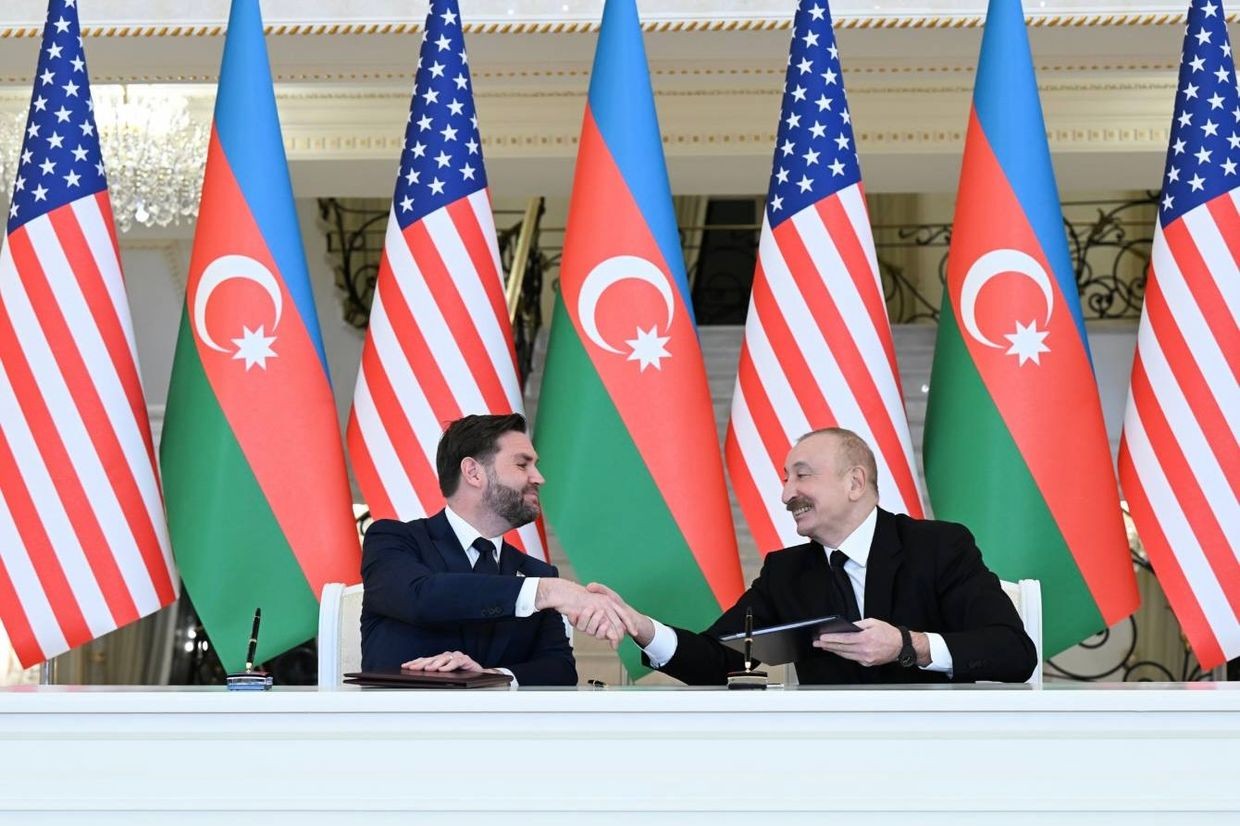
This development marks a shift from energy-centric cooperation toward a comprehensive, multi-sector partnership. Historically, bilateral relations have largely relied on energy collaboration, but the new framework institutionalizes and broadens the cooperation to include other sectors, reflecting a purposeful strategic pivot.
Recently, Azerbaijani and U.S. officials met again in Washington at the U.S.-Azerbaijan Trade and Business Conference, discussing the formation of a comprehensive economic partnership framework and the development of a joint investment model. Meetings with representatives from U.S. government agencies and companies focused on expanding economic and trade ties, exploring investment opportunities, and identifying new areas for collaboration.
The conference also marked the 30th anniversary of the U.S.-Azerbaijan Chamber of Commerce (USACC). Representatives from both countries’ energy, finance, ICT, and other sectors attended. Over three decades, USACC has played a key role in fostering reliable dialogue between business communities and promoting reciprocal investments.
In the main session on “Strengthening Bilateral Trade and Strategic Cooperation,” First Deputy Minister of Economy Elnur Aliyev highlighted that the “Trump Route for International Peace and Prosperity,” established under the Joint Declaration for Peace signed by the presidents of Azerbaijan and Armenia, will contribute to expanding trade and investment. He also showcased Azerbaijan’s favorable business environment, the economic potential of Karabakh and Eastern Zangazur, its transit-logistics capabilities, and the Alat Free Economic Zone as a hub for value-added activities.
Other officials, including Deputy Minister of Energy Orkhan Zeynalov, Chairman of the International Relations Committee of the National Assembly Samed Seyidov, and SOCAR President Rovshan Najaf, discussed strengthening collaboration in energy and transport-logistics sectors. They emphasized Azerbaijan’s role as a reliable energy partner and its initiatives in regional transport projects, which enhance both bilateral and multilateral partnership potential.
Representatives from the U.S. Department of Commerce and U.S. State Department stressed the importance of promoting business relations and cooperation in mutually beneficial areas. Panel sessions addressed technology and innovation, digitalization, energy infrastructure, finance, and banking, creating platforms for detailed discussions.
Deputy Minister Aliyev met with Su Le, CEO and co-founder of HAIMAKER.AI Inc., to explore collaboration in digital transformation, artificial intelligence, and innovative digital solutions. Further meetings with U.S. officials, including Bill Gidera of the Department of Commerce, Karl Kress of USTDA, and representatives from USTR, Export-Import Bank, DFC, VISA, and Tetra Tech, focused on expanding economic ties, exploring investment opportunities, and advancing projects in energy, logistics, industry, and digital economy sectors.
Within this framework, a Memorandum of Understanding was signed between Azerbaijan’s Ministry of Economy and HAIMAKER.AI Inc. to create a next-generation digital platform and ecosystem in Azerbaijan.
Azerbaijan’s recent initiatives demonstrate a deliberate strategy to transition from a primarily energy-based partnership with the U.S. to a multisectoral economic cooperation model. By institutionalizing strategic dialogue, promoting investment, and integrating digital and technological solutions, Azerbaijan positions itself as a regional hub for trade, innovation, and logistics. U.S. engagement, particularly through agencies like USTDA, DFC, and USTR, indicates a strong willingness to support this transition and leverage mutual benefits in areas beyond energy.
Azerbaijan’s evolving economic diplomacy with the United States reflects a mature, forward-looking strategy that balances regional stability with global integration. The recent agreements and high-level discussions establish a foundation for sustained, diversified, and mutually beneficial economic growth. By fostering multi-sector partnerships, Azerbaijan strengthens bilateral ties and also enhances its role as a key regional player in trade, energy, and digital innovation.
URL: http://www.today.az/news/analytics/266387.html
 Print version
Connect with us. Get latest news and updates.
See Also
- 27 August 2026 [08:30]
What Azerbaijan’s banking boom says about economy - 26 August 2026 [08:30]
Shift from oil to lithium sparking new global race for strategic resources - 22 August 2026 [15:01]
US is leaving Iraq as Baghdad faces new fight for sovereignty [COMMENTARY] - 22 August 2026 [08:30]
Gaza’s next phase puts Trump, Netanyahu and Hamas on collision course [ANALYSIS] - 21 August 2026 [08:30]
Azerbaijan, Uzbekistan turn $1 billion trade target into Eurasian growth bet - 19 August 2026 [14:28]
Hidden logic behind Russia's regional pressure campaign - 19 August 2026 [08:30]
China’s manufacturing surplus poses new test for global economy - 13 August 2026 [08:30]
From political dispute to trade artery: How Zangezur Corridor is taking shape - 11 August 2026 [08:00]
U.S. oil reserves hit 1983 low - 09 August 2026 [17:49]
Ukraine war evolves into global contest as Russia, Iran face pressure
Most Popular
 S&P upgrades Azerbaijan Business Development Fund’s credit rating to ‘BB’
 Serzh Sargsyan appears before Armenia’s anti-corruption committee
 Erdogan says Türkiye will not abandon Syria or let Israel draw red lines
 Shift from oil to lithium sparking new global race for strategic resources
 What if… we extradited Kocharyan to Baku, huh?
 NASA launches telescope to explore Universe and find planets
 Azerbaijan exports $151.9 million in copper ores and concentrates in January-July