|
|

TODAY.AZ / Analytics
Baku positions itself as regional digital hub through WTDC-25
01 December 2025 [13:58] - TODAY.AZ
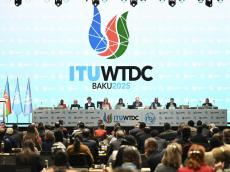
Baku’s role as the host of the World Telecommunication Development Conference (WTDC) this year underscores its growing status not only as a regional telecommunications hub but also as an emerging center for international digital cooperation.
In his address to participants, President Ilham Aliyev underscored that Azerbaijan has increasingly become a venue for global dialogue on digital transformation — a direction aligned with the country’s broader ambitions to strengthen its position in the global ICT landscape.
Today, the accelerating rise of the digital economy reflects big structural changes in global development. Information and communication technologies (ICT) have evolved from supportive tools into foundational drivers of innovation, competitiveness, and sustainability. Governments and enterprises now rely on digitalization as a strategic instrument — enabling streamlined operations, advanced analytics, predictive decision-making, and optimized resource management. These capabilities have become essential for building modern governance systems, ensuring economic resilience, and improving public services.
Azerbaijan hosts WTDC for the first time in the CIS region - WTDC-25, organized in partnership with the International Telecommunication Union (ITU), was held in Baku from November 17 to 28 — marking the first time the conference has been hosted in the CIS region. The event brought together 2,500 participants from more than 160 countries, including ministerial-level representatives from about 60 nations.
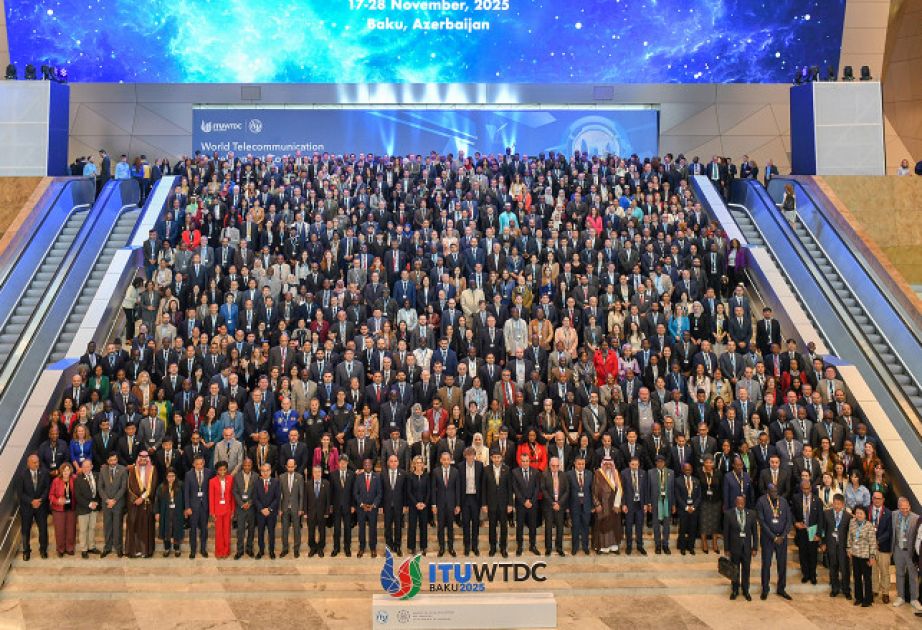
The conference plays a strategic role in shaping global ICT policy. Its core mission is to bridge the digital divide, accelerate digital transformation, and support developing countries in adopting effective and inclusive technological solutions. By hosting WTDC-25, Azerbaijan further strengthened its reputation as a regional leader in technological policy and innovation, while positioning Baku as a neutral platform for international digital cooperation.
A major outcome of WTDC-25 was the adoption of the Baku Action Plan — the primary guidance document for global digital development for the period 2026–2029. The plan outlines the strategic direction for human-centric and inclusive digital growth, emphasising the needs of developing nations, underserved communities, and vulnerable groups.
The relevance of this commitment is underscored by a pressing global challenge: more than two billion people worldwide still lack internet access. The Baku Action Plan aims to address this disparity by advancing universal, meaningful, and affordable connectivity, essential for ensuring that the benefits of the digital economy are shared across all societies.
ITU Secretary-General Doreen Bogdan-Martin highlighted the importance of this milestone, stating: “WTDC-25 has brought us closer to our goal of ensuring universal, meaningful, and affordable connectivity for everyone, everywhere, in this decade. The Baku Declaration and Action Plan serve as our human-centric digital development roadmap that leaves no one behind.”
The Action Plan includes new and updated resolutions that will guide the ITU Telecommunication Development Sector (ITU-D), setting clear technical priorities for expert groups working on issues such as cybersecurity, ICT regulation, digital inclusion, and next-generation network development.
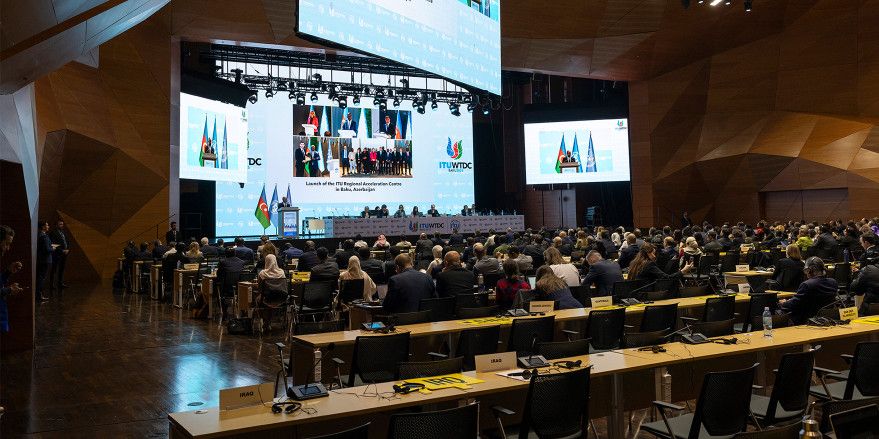
Crucially, the plan also incorporates regional initiatives tailored to the digital needs of the ITU’s six global regions. These initiatives outline priorities ranging from infrastructure deployment and enhancement of digital skills to the development of inclusive digital public services. To implement these ambitions, the ITU will work to build partnerships and mobilise financial and technical resources, ensuring that commitments translate into practical results.
Azerbaijan’s own progress illustrates how digitalisation drives development across multiple sectors. Public service innovation remains one of the country’s most visible achievements. Platforms like SIMA Imza, developed by “AzInTelecom” LLC under AZCON Holding, are redefining how citizens interact with government. Through SIMA, users can access more than 100 electronic services, authenticate their identity via facial recognition, and sign official documents remotely. Such systems demonstrate how cloud-based digital solutions can expand access, increase efficiency, and improve user experience.
Institutions such as ASAN Service and DOST Agency have been widely recognised for modernising public services through transparency, efficiency, and citizen-centric design. Their success has attracted international attention: 25 countries are currently studying or implementing the ASAN model, positioning it as a globally relevant governance innovation. These platforms do more than simplify bureaucracy — they strengthen public trust, reinforce state-citizen interaction, and promote a more transparent public administration ecosystem.
Azerbaijan’s digital strategy demonstrates that digitalisation is not merely an upgrade to existing systems but a comprehensive engine of economic diversification and social development. From energy and transportation to finance and public administration, digital tools and artificial intelligence are improving efficiency, expanding service access, and increasing transparency.
Hosting WTDC-25 serves both as recognition of Azerbaijan’s achievements and as a catalyst for future progress. The conference has reinforced the country’s role in global digital policy-making and deepened its integration into international ICT cooperation networks.
With continued investment in infrastructure, cyber resilience, cloud technologies, and digital skills, Azerbaijan is well-positioned to transition from being a regional ICT adopter to becoming a regional digital leader, helping shape the global digital agenda.
URL: http://www.today.az/news/analytics/263860.html
 Print version
Connect with us. Get latest news and updates.
See Also
- 04 September 2026 [14:42]
SOCAR’s €600 million Nis plant takes Azerbaijan’s gas strategy into power - 04 September 2026 [08:30]
Armenia’s first export to Azerbaijan opens bigger question of peace profits - 03 September 2026 [13:58]
Can Mecca Defense Alliance reshape security from Middle East to Caucasus? - 03 September 2026 [09:00]
Washington’s Venezuela oil deal threatens China and Russia’s energy grip - 02 September 2026 [14:56]
China’s CNOOC finds more than oil in Azerbaijan’s Caspian pivot - 02 September 2026 [07:00]
Armenia wants Europe without giving up Russia’s economic lifeline - 01 September 2026 [06:00]
Azerbaijan seeks bigger role in Asia-Europe trade as SCO corridors expand - 31 August 2026 [09:47]
Why President Aliyev’s Kyrgyzstan visit matters for Eurasia’s new trade routes - 27 August 2026 [08:30]
What Azerbaijan’s banking boom says about economy - 26 August 2026 [08:30]
Shift from oil to lithium sparking new global race for strategic resources
Most Popular
 Ukraine signals 'serious momentum' in peace talks with Russia
 Immediate threat: how Azerbaijan is dealing with “legacy” of occupation
 Can Mecca Defense Alliance reshape security from Middle East to Caucasus?
 Miley Cyrus drops her surname as she enters new musical era
 Azerbaijan, Lithuania discuss regional security and bilateral ties
 President Ilham Aliyev received President of OSCE Parliamentary Assembly
 Armenian middleman sentenced in US over Russia sanctions evasion