Today.Az » Society » Expert: Cities need to adapt to ageing populations and climate challenges
21 May 2026 [11:46] - Today.Az
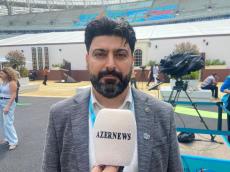
Speaking at the 13th session of the United Nations World Urban Forum (WUF13) in Baku, transport expert Rauf Aghamirzayev, in his comment for AzerNEWS, described the forum as an important global platform for discussing the future of cities, modern urban challenges, and practical solutions being implemented around the world. According to him, cities today face a number of common problems, including the effects of climate change, environmental degradation, traffic congestion, noise pollution, and the growing challenge of ageing urban populations. “In general, I think the World Urban Forum is a wonderful platform that offers new solutions and discussions about the development of world cities, what challenges they face, and what measures are being taken against them,” he said. Aghamirzayev noted that modern cities must increasingly adapt to demographic realities and ensure accessibility for all residents, especially elderly people. “The city must be built in a way that allows the elderly population to move more comfortably and safely,” he emphasised. Speaking about Baku, the transport expert said the Azerbaijani capital faces many of the same urban challenges as other major cities, but has also introduced a number of progressive reforms in recent years. “In the last three years, a transformation of mobility has taken place,” he said, pointing to decisions focused on the efficient use of land resources, the introduction of dedicated bus lanes, and the development of micromobility infrastructure. According to him, these reforms represent relatively low-cost and quickly visible improvements that have already created new mobility opportunities across the city. At the same time, Aghamirzayev stressed that more comprehensive and long-term reforms are also underway through Azerbaijan’s state transport development programs. “The more profound reforms are reflected in the state program, which envisages the development of alternative transport, especially rail transport,” he noted. He highlighted plans to expand and modernise Baku’s metro network, restore suburban electric trains and tram systems, improve transport interchange integration, and increase the number of buses operating in the capital from 2,350 to 2,800. Aghamirzayev emphasised that modern cities should no longer be designed around cars, but around people. “I think it is essential that modern cities are no longer car-centric, but people-centric and people-oriented,” he stated. He stressed the importance of prioritising pedestrian infrastructure and creating inclusive urban environments accessible to everyone, regardless of age or physical condition. “Not everyone in the city is healthy, and not everyone is young. The city should be built more fairly so that everyone can move comfortably,” he said. The transport expert also underlined the importance of continuous, barrier-free sidewalks, shorter pedestrian routes, and safer street crossings. “Pedestrians should be at the top of the hierarchy of traffic participants in a modern city,” he noted. According to him, cities should increase the number of zebra and signalised crossings and introduce traffic-calming measures to reduce accidents and improve safety. “Solutions such as safety islands, contrast markings, and lane narrowing should be applied so that we can protect people and provide them with more comfortable movement,” Aghamirzayev added. Concluding his remarks, he pointed to the importance of applying high urban accessibility standards not only within specific event zones, but across cities as a whole. “If we have the potential to build systems and standards at this level, then it is important to apply them on a larger scale throughout our cities,” he said.
|
