Today.Az » World news » Why ExxonMobil sees Azerbaijan as investable while Venezuela remains high-risk
13 January 2026 [08:30] - Today.Az

Possession of abundant natural resources has long been regarded as a defining economic asset for nations - yet it can also present significant challenges. Whether resources become a lasting foundation of prosperity or a source of political and economic vulnerability hinges on governance. Effective management requires governments to cultivate a stable legal and regulatory environment that can attract and retain long?term investment, while also safeguarding national interests and resource ownership. Oversight, commercial predictability, and mutual trust between host states and investors are central to this balance. Current tensions in the United States illustrate these dynamics in practice. In early 2026, President Donald Trump publicly encouraged major U.S. energy companies to commit substantial capital to revitalizing Venezuela’s oil industry, a push that followed dramatic political events in that country. However, ExxonMobil’s CEO described Venezuela as “uninvestable” under existing conditions, citing concerns over legal protections and commercial frameworks that would be necessary for major capital deployment. This prompted President Trump to suggest that ExxonMobil might be excluded from future investment opportunities there, underscoring the political and strategic complexity of resource?sector decisions. 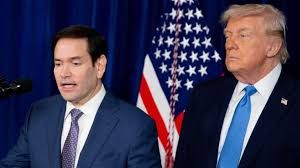
The U.S.-Venezuela episode highlights a broader point: natural?resource development is not automatic wealth. Investment decisions by global energy firms are shaped not only by resource potential, but by perceptions of legal certainty, investment protection, and political stability. In jurisdictions where these elements are viewed as uncertain, even large reserves may remain untapped. By contrast, Azerbaijan’s long?standing cooperation with ExxonMobil demonstrates a different model of engagement. A clear indicator of this is the long-term presence and active participation of ExxonMobil in the country’s energy sector. The U.S. oil giant, despite current controversies in its home country regarding Venezuela, has maintained steady cooperation in Azerbaijan for decades, beginning with its involvement in the landmark “Contract of the Century” for the development of the Azeri-Chirag-Gunashli (ACG) oil fields in the Caspian Sea. Today, ExxonMobil retains a 6.79 percent stake in ACG, a consortium that includes BP (30.37%), SOCAR (31.65%), and other international partners. Beyond oil production, ExxonMobil is a shareholder in the Heydar Aliyev Baku-Tbilisi-Ceyhan (BTC) main export pipeline, holding a 2.5 percent stake. These investments reflect more than mere commercial activity - they demonstrate a long-term commitment to Azerbaijan’s energy sector and confidence in the country’s regulatory and economic environment. Regular high-level engagements reinforce this strategic partnership. In March 2025, Minister of Energy Parviz Shahbazov met with ExxonMobil Vice President John Ardill to discuss opportunities for expanding cooperation. The discussions highlighted the application of modern technologies to reduce methane emissions, lower operating costs, and increase production efficiency. The conversation also covered electrification initiatives in the hydrocarbon sector, hydrogen development, and renewable energy expansion - aligning with Azerbaijan’s goal of reaching 35.5 percent renewable energy in electricity production by 2030. Further formalizing their collaboration, SOCAR and ExxonMobil signed a Memorandum of Understanding during the Baku Energy Week in June 2025, followed by a Memorandum of Cooperation signed in Washington in August of the same year. These agreements demonstrate mutual interest not only in oil and gas projects but also in modernizing the energy sector and exploring new investment avenues. 
This engagement must also be seen in the broader context of Azerbaijan-U.S. relations. President Ilham Aliyev’s working visit to Washington, at the invitation of U.S. President Donald Trump, marked a significant thaw in bilateral relations between Azerbaijan and the United States. Prior to the Trump Administration, relations had often been described as underdeveloped or unsatisfactory. During this visit, a key milestone was achieved with the initialing of the “Agreement on the Establishment of Peace and Interstate Relations between the Republic of Azerbaijan and the Republic of Armenia” by the foreign ministers of both countries, signaling a renewed commitment to regional stability. 
Although the full repeal of Amendment 907 by the U.S. Congress has not yet been realized, the discussions during the Washington meeting represented a substantial diplomatic step forward. Beyond the South Caucasus peace process, the visit served to open a new chapter in Baku–Washington relations, emphasizing strategic collaboration. A central outcome of the visit was the signing of a Memorandum on the Establishment of a Strategic Working Group, intended to develop a U.S.- Azerbaijan Strategic Partnership Charter. This document, formally titled “Memorandum of Understanding between the Government of the Republic of Azerbaijan and the Government of the United States of America on the Establishment of a Strategic Working Group to Develop a Charter for a Strategic Partnership between the Republic of Azerbaijan and the United States of America,” provides a structured roadmap for bilateral cooperation. It encompasses a broad range of priorities, including regional connectivity, energy, trade and transit, economic investment (covering digital infrastructure and artificial intelligence), defense sales, and security cooperation, including counterterrorism efforts. The visit and resulting agreements underscore Azerbaijan’s growing importance as a strategic partner for the United States and highlight the country’s potential as a stable and attractive destination for investment and long-term cooperation. Analytically, ExxonMobil’s long-term presence in Azerbaijan is significant. It is not simply a matter of accessing oil reserves but an indicator that the country offers a stable, predictable, and profitable investment climate. Unlike Venezuela, where resource wealth has often been undermined by political instability and misaligned investment strategies, Azerbaijan has cultivated both resource stewardship and investor confidence. Foreign companies, particularly major U.S. energy firms, continue to see Azerbaijan as a viable, long-term partner, a fact underscored by repeated expansions of joint projects and high-level governmental engagement. In conclusion, Azerbaijan exemplifies how resource-rich countries can transform natural wealth into sustainable economic growth. The enduring partnership with ExxonMobil - spanning decades, multiple projects, and strategic agreements - serves as a clear signal: Azerbaijan is a country worthy of investment, not only for its abundant hydrocarbon resources but also for its forward-looking policies, commitment to innovation, and stable investment environment. For companies seeking reliable opportunities in the energy sector, Azerbaijan has proven itself to be a secure and strategically important destination.
|
