Today.Az » Politics » A corridor that everyone needs: TRIPP becomes the answer to the crisis in the region
15 April 2026 [13:13] - Today.Az
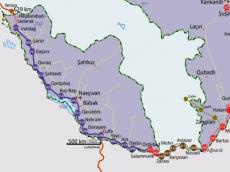
What is happening in the Middle East has jeopardized many
good initiatives in the region. This includes TRIPP (the "Trump
Route" or the Zangezur Corridor), a project that was supposed to become
the second important artery connecting Europe and Asia through the South
Caucasus.
The Zangezur corridor, renamed TRIPP after the meeting in
Washington on August 8, 2025, caused a negative reaction from Iran from the
very beginning. The geo-economic project poses no threat to the integrity and
security, as well as the interests of any country at all. Nevertheless, in
Tehran, they saw it as a prospect containing some risks. Armenia also supported
Iran's position before the United States joined the case. However, with the
development of the peace process in Yerevan, they began to look at many things
differently and recognized that communication through Meghri is more important
for Armenia itself than even for Azerbaijan.
An American delegation was due to visit Armenia in April in
connection with the launch of TRIPP. The visit was postponed due to the
situation near the borders of our region. Regardless of how the current
confrontation in the Middle East ends, the Iranian factor will remain at a
sensitive level in our region, which means that the topic of TRIPP may be off
the agenda for a very long time. Analysts do not rule out that due to the
current events, Iran will further toughen its position towards the Zangezur
corridor - communications between the western regions of Azerbaijan and
Nakhchivan will be considered by the Iranian side as a military target. This
prospect pleases the pro-Russian Armenian opposition, but it cannot please
Azerbaijan, Turkiye and the current government of Armenia.
The challenges and risks that have arisen for regional
communications in connection with the war between the United States and Israel
against Iran are serious. The issue of their safety is not an idle one.
Nikol Pashinyan recently told reporters that Armenia will
open a railway with Azerbaijan. According to him, Armenia is entering a new
stage of economic development. "In the near future, we expect important
events, which are primarily related to the launch of the TRIPP project, which
is crucial because it will finally bring the Republic of Armenia out of the
"blockade" (our quotes - ed.)... This is very important, and the
political agreement is that this railway will never be closed. In other words,
it is a reliable route for both imports and exports," Pashinyan said.
The Armenian Prime Minister's optimism is shared by the US
State Department, which, in response to a request from the Armenian media,
stated that the Trump administration remains committed to the implementation of
TRIPP. "This project remains one of Washington's top priorities, as it has
the potential to promote peace and prosperity in the South Caucasus and
beyond," the State Department noted.
The Armenian opposition is also very optimistic about the
TRIPP issue, but for a completely different reason. Opposition speakers are
confident that the current war has buried TRIPP, and if the project is somehow
implemented, the road will become a legitimate military target for Iran.
Meanwhile, TRIPP is a purely geo-economic project that does
not threaten any of the neighbors of Azerbaijan and Armenia in the region.
The Zangezur corridor is considered as one of the key
infrastructure projects of the South Caucasus, which can not only change the
logistics map of the region, but also become an important factor for economic
growth and sustainable peace. Its importance goes far beyond a purely transport
corridor - it will be a whole communications system combining transport, energy
and digital infrastructure. TRIPP is a multifunctional infrastructure corridor
that includes railways and highways, pipelines, power transmission lines, and
fiber-optic cables. The main objective of the project is to connect Azerbaijan
with Nakhchivan through the territory of Armenia and integrate the South
Caucasus into a broader Eurasian transport exchange, including the Middle
Corridor (Trans-Caspian International Transport Route).
TRIPP is not just 43 kilometers of road from one border of
Azerbaijan to another. This is an element of the formation of new land routes
between Europe and Asia that can reduce dependence on congested or politically
unstable destinations. The project will strengthen the region as an important
transit hub between East and West, reduce cargo delivery time between Asia and
Europe, increase traffic volumes, and diversify trade routes. This is
especially important against the background of instability of traditional
routes, including routes through Russia and Iran. For Azerbaijan, this means
strengthening the role of a logistics hub, and for Armenia, breaking out of
transport isolation and becoming a transit country.
It was planned that the project implementation would begin
before the end of this year or next year. We are realists and, of course, we
understand that in today's situation it is not worth talking about any
deadlines. Nevertheless, the attacks on the project continue, and I would like
to say a few words in its defense.
Despite the political speculation surrounding the project,
its essence remains purely economic and infrastructural. The insinuations
spread by ill-wishers are unfounded. Because in reality, TRIPP has no military
component, it does not provide for the deployment of military bases, military
control over territories, or border changes. This is a project aimed solely at
the development of trade and communications.
TRIPP also includes energy infrastructure, such as oil and
gas pipelines and electricity transmission lines. In other words, new energy
export routes are being created, the stability of the energy systems of the
region's countries is increasing, and opportunities for the transfer of
"green energy" are opening up. In short, energy integration in the
region is strengthening, and Iran can join it very effectively and
successfully.
The implementation of such projects involves investments,
the opening of new jobs, the expansion and modernization of infrastructure, and
the strengthening of connectivity. According to experts, the economic effect of
TRIPP will extend not only to the participating countries, but also to
neighboring states involved in transit chains. Strengthening economic
integration, in turn, will contribute to strengthening regional security.
Simply put, economic interests will make conflicts in this part of the world unprofitable.
This is so obvious that it cannot raise any questions. It is enough to look at
the relations between the countries involved in other projects initiated by
Azerbaijan. Common interests generate mutual understanding, and mutual
understanding strengthens peace. The stability of relations and a healthy
atmosphere between neighbors is the key to the success of all endeavors.
Azerbaijan always proceeds from this truth and therefore has won and continues
to win. And along with him, his friends, neighbors, and neighbors of his
neighbors win. As President of Azerbaijan Ilham Aliyev said in one of his
speeches, "the country must have good relations with your neighbors and
your neighbors' neighbors in order to be able to implement projects in the field
of energy, security and transport connectivity."
This formula has been adopted in Yerevan today. It has long
been accepted as fundamental in Georgia, Turkiye, Central Asian countries and
the European Union. Similarly, in the period before the outbreak of a new
conflict in the Middle East, TRIPP was perceived as an integrating project
necessary for everyone. And when this initiative of Azerbaijan is implemented,
the whole region will be in the black.
During the Global Baku Forum in March this year, the head of
state, speaking about the Zangezur corridor, noted: "... this is a kind of
win-win situation for us, I mean for all of us. For those who really want to
take advantage of this new opportunity, because we will connect the two parts
of Azerbaijan with transport infrastructure and create a new expansion, as I
said, of new corridors, which will benefit many countries."
The project will be implemented on the territory of Armenia
while maintaining its full sovereignty. We are not talking about any kind of
"extraterritoriality" or loss of control. It was this term that was
often heard a year ago in the statements of the Armenian side and was actively
supported in Iran. Due to the lack of any intelligible arguments from the
opponents of the project, no discussions and substantive discussions were held
around the project. TRIPP's opponents simply had nothing to show for it. The
topic of the road through Zangezur was not a matter of dispute, she just came
across a concrete "no".
TRIPP is not a zero-sum game. It will benefit everyone,
including Iran. The country, which has been isolated for many years, will have
the opportunity to realize its potential by integrating into new routes.
The project is able to change the economic geography of the
region, enhance the role of the South Caucasus in world trade, and make it more
attractive for investment. That's why TRIPP doesn't need to be afraid. It
should be considered as one of the examples when infrastructure becomes an
instrument not of rivalry, but of uniting the region.
Does all this pose any threat to Iran or any of Azerbaijan's
other neighbors? Whatever analysis tools are used as a basis, the answer to
this question will still be negative.
|
