Today.Az » Politics » Decarbonization and pragmatism: how does Baku act?
17 February 2026 [12:12] - Today.Az
According to media reports, US President Donald Trump has
invalidated a 2009 document recognizing greenhouse gases as harmful to health.
This will allow, in particular, to remove restrictions for the automotive
industry. Trump called the so-called "endanger finding", adopted
under Barack Obama, catastrophic and seriously damaging to the US automotive
industry.
This decision, as many observers believe, put an end to the
actively promoted policy of decarbonization and denigration of fossil fuels in
recent years.
The atmosphere around the topic of decarbonization began to
change immediately after Trump was elected President of the United States. The
new head of the White House, unlike the previous administration, turned out to
be an opponent of the green agenda, which inspired those who opposed it in
Europe itself. The heads of large companies have spoken more boldly about the
unacceptability of a radical green transition. In particular, in December 2024,
an open letter from the owner of one of the world's largest steelmaking
companies (ArcelorMittal Holding) appeared in the Financial Times Lakshmi
Mittala. The entrepreneur complained about the unprecedented problems faced by
the European steel industry due to the cost of decarbonization. Decarbonization
of the industry requires huge investments and the use of currently non-viable
green hydrogen.
Mittal would hardly have dared to talk about this and go
against the Western trend if the newly elected US President had not been a
proponent of traditional fuels. Of course, the problem of greenhouse gases and
climate change exists and is a direct consequence of human activity, but the
radical and categorical methods used by the trendsetters of "green"
fashion did not look like a real concern for the planet. They sounded more like
attempts at economic redistribution of the world and political pressure on oil
and gas producing countries.
But the President of Azerbaijan told the truth before anyone
else. In June 2024, at the opening of the Baku Energy Week, responding to
demagoguery from Europe, he said: "We cannot be blamed for the fact that
we have oil and gas. It's a gift from God." And at the opening of COP29 in
Baku, the head of state spoke even more specifically: "Oil, gas, wind,
sun, gold, silver, copper are all natural resources. Countries cannot be blamed
for having these resources. Also, they should not be blamed for bringing these
resources to the market. Because the market needs them. People need them. So,
here's my message: As president of COP29, we will, of course, strongly advocate
for a "green" transition, and we are doing this. But at the same
time, we must be realistic," President Ilham Aliyev said.
Back then, during the peak popularity of the topic of
decarbonization, not every leader of a mining country would have risked going
against the trend thoughtlessly promoted by the West and calling for a
realistic view of things. It is clear that the author of such a categorical
agenda could not be the East, where most of the producing countries are
concentrated. Tellingly, the largest oil and gas producers in the Middle East
have developed "green" technologies. Nevertheless, with the expansion
of European "green" propaganda, our country has become a target for
criticism, although, paradoxically, Europe itself buys Azerbaijani oil and gas.
Since the outbreak of the war in Ukraine, despite the strict requirements of
the Paris document, EU countries have begun to increase purchases of
Azerbaijani gas, Germany last year significantly increased imports of Caspian
oil, and this year began to receive our gas. While criticizing Baku, the
Europeans simultaneously viewed it as a partner in their energy security.
Radical decarbonization has proven to be an overly complex
and expensive process. And today, the complete abandonment of fossil fuels is
no longer seen as an achievable goal in the medium term. The modern world, with
its industrial content, cannot do without oil and gas. The transfer of
polluting industries to third world countries, as has always been practiced by Western
countries, also does not justify itself from a climatic point of view, since it
does not change anything for the problems that have already formed on the
planet.
Many are already beginning to realize the need for balance
and the lifting of strict restrictions for oil companies. Some corporations,
under pressure, began to refocus on "green" projects and curtail oil
and gas. European banks have stopped financing projects related to fossil
fuels. And again, the paradox is that all this was done against the background
of the abandonment of Russian gas and energy starvation. The EU shares its
expectations for the expansion of Azerbaijani supplies, but no one talks about
who will pay for the expansion of the Trans-Adriatic Pipeline (TAP). Azerbaijan
is ready to expand supplies, especially since additional volumes of gas are
being released with the introduction of alternative energy sources in the
country. However, he is not ready to finance the project, while the Europeans
do not even want to sign long-term contracts.
At the Baku Energy Week 2025, President Ilham Aliyev stated
that Azerbaijan's agenda regarding COP29 was very pragmatic. "She was far
from populism and false narratives. It was based on pragmatic calculations of
countries' demand for fossil fuels. And we see what happens in some countries
when the balance between fossil fuels and green energy is not maintained. This
causes power outages, energy collapse, and can lead to much more complex
consequences. Therefore, I consider it the right policy to maintain balance and
not follow the trends of the times, which sometimes dictate our steps," he
said.
Another leader who dared to go against the harsh agenda was
Italian Prime Minister Giorgia Meloni. Speaking at the COP29 Leaders' Summit in
Baku, Ms. Meloni said that there is currently no single alternative to the
supply of fossil fuels, and called for a realistic global outlook and balance.
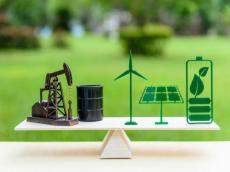
The balance between renewable energy and oil production is
absolutely real. This is not a far-fetched narrative designed to ensure the
economic interests of producing countries. It was in oil and gas producing
Azerbaijan that the Garadagh solar power plant, the largest solar power plant
in the region, built, among other things, by the UAE oil and gas producing
company Masdar, started operating three years ago. In January 2026, the largest
Khizi-Absheron wind power plant in the South Caucasus, built by another Middle
Eastern partner of Azerbaijan, the Saudi company ACWA Power, was commissioned.
And now the Bilasuvar SES is being built in Bilasuvar, which will surpass the
Garadagh SES in terms of capacity. Mining Azerbaijan is acting while the
Europeans are experiencing serious problems created by their own
short-sightedness.
The participation of global oil giants in renewable energy
projects in Azerbaijan can be cited as proof of the compatibility of seemingly
contradictory agendas. BP is involved in the construction of a 240-megawatt
solar power plant in Jabrayil, as well as in the electrification project of the
Sangachal terminal. At the same time, the British oil giant continues to
produce hydrocarbons in the Caspian Sea and is considering expanding its participation
in projects.
There are very few European countries among Azerbaijan's
partners in renewable energy projects. But the UAE, Saudi Arabia, and China are
actively cooperating with Baku in this area. I must say that these are the
countries that have succeeded in advancing the decarbonization agenda. For
example, China currently has two of the world's largest solar power plants, and
the world's TOP 10 includes four solar power plants in this country. We also
remind that Azerbaijan cooperates with China in terms of environmentally
friendly transport.
Azerbaijan does not change the green agenda, it successfully
combines it with the use of the wealth given to the Azerbaijani land. At the
"Breakfast with the leadership of Azerbaijan" event organized by Euronews
during the Davos Forum, President Ilham Aliyev stated that "we have
well-founded hopes that we can experience a second very significant oil boom in
Azerbaijan if exploration projects conducted by international energy companies
produce good results. We hope so."
The era of fossil fuels is far from over. It's just not
realistic. The development of the modern world is based on these energy
sources. In order to abandon them, the world must completely technologically
rearm, spending unthinkable amounts on this. Only then will it be possible to
achieve the goal of decarbonization.
Saving the planet, stopping climate change, and restoring a
clean atmosphere and healthy environment to people are wonderful and very
important goals. Greenhouse gases really worsen the state of the atmosphere,
but the fight against them should not turn into terror. Mindless
decarbonization will lead not to saving the planet, but to new crises and wars.
But I would like humanity to reach the era of clean air alive.
|
