Today.Az » Politics » Drop by drop: what the situation in Iran reminded us about
02 December 2025 [13:13] - Today.Az
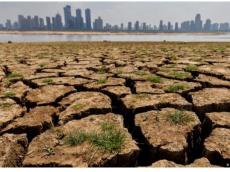
The problem of water scarcity in Iran has reached a critical
point. A few days ago, President Masoud Peseshkian said that the
country no longer has a choice and the capital must be moved from Tehran.
According to him, the city will not be able to continue to exist due to serious
environmental problems. The problems of the city of 10 million are related to
drought and scarcity of water sources. Climate change has hit the Islamic
Republic in the most sensitive area - water resources. Precipitation has
decreased significantly in the last five years, and this summer's drought has led
to a critical situation. Tehran is provided with water from five large
reservoirs. The reservoirs that provide the capital with drinking water are
filled by only 5 percent or less. In the summer, we hoped for autumn, but it
also passed without rain for the region. Earlier in November, Masoud Pezeshkian
warned that if precipitation did not start by winter, the capital would have to
be evacuated. There will be no other way out. The rains did not start, and now
the issue of moving the capital from conversations began to turn into a real
prospect. This does not mean that she will start moving tomorrow, but the
situation, as follows from the statements of officials, is really serious. In addition to the drought, Tehran is facing another threat
- the city is sinking by 30 centimeters annually. The reason is the depletion
of groundwater reserves due to the unsystematic drilling of artesian wells by
the population for irrigation purposes. At one time, the authorities
thoughtlessly allowed farmers to drill into the land as much as they wanted,
considering it an incentive for the development of agriculture, and did not
take into account Iran's limited water resources. And it is precisely the
agricultural sector that is now in decline due to the lack of water for irrigation.
Whatever the reasons, they don't really matter anymore. This rate of subsidence
of the soil under the capital is a very serious reason to think about the
future of Tehran. The city actually goes underground. Numerous dams and reservoirs have also added problems, which
in a country with a small number and low water content of rivers has led to a
change in the water regime. On November 29, one of the hydroelectric power
plants in Khuzestan province stopped working due to critically low water levels
- only 180 meters with the required 220. This year, only 3 percent of normal
precipitation has fallen in Iran, and a tenth of the reservoirs are on the
verge of drying up, which affects the operation of hydroelectric power plants
and, consequently, the country's energy supply. Iran is ready to cooperate with any foreign countries to
solve the water crisis and exchange technologies. The head of the economic
group in the office of Supreme Leader Ayatollah Ali Khamenei wrote about this
on the social network X on Saturday. "The problems of water shortage
cannot be solved in the short term. We use the most expensive water for such
simple purposes as washing cars and cleaning the house, and for all these
purposes there are solutions that are not related to water consumption,"
he said. Iran cannot do without international assistance and new
technologies in this area. The country does not have the best positions on the
world stage, but with a partner like China, it could achieve something. By the way, the media reported the other day that
specialists from Shanghai Jiaotong University have developed a new technology
that allows drinking water to be obtained directly from the surrounding
atmosphere. Condensation and absorption methods are used to collect water, as well
as a heat pump. Allegedly, the development is adapted to various climatic
conditions, including high temperature and low humidity. The invention of Chinese specialists could be useful not
only for Iran. The problem of shortage of drinking water is gradually becoming
global.
An international team of scientists from the United States,
Great Britain, Switzerland and France has found that the total amount of fresh
water on Earth has decreased dramatically since 2014. This may indicate the
planet's transition to a stable dry phase. Scientists were able to draw such
conclusions from long-term satellite observations. In 2024, the UN published a
report on water scarcity in the world. According to the report, the reduction
of available water resources puts a strain on farmers and communities, which
can lead to hunger, conflict, poverty, contamination of water sources and an
increased risk of disease. According to the World Bank, Brazil, Russia, Canada, the USA
and China are the leaders in freshwater reserves. Unfortunately, Azerbaijan is
one of the countries that may face the risk of dehydration. Over the past 40-45 years, fresh water reserves in
Azerbaijan have decreased by 25 percent, Chairman of the State Agency for Water
Resources of Azerbaijan Zaur Mikayilov said at the Baku Climate Action Week in
late September and early October. According to him, since the 1980s, the level
of the Caspian Sea has decreased by about two meters, and the water level in
the Kura River has decreased by about the same amount. Against the background
of declining water resources, losses of drinking water and fresh water in
irrigation networks are still high, and only a third of the population has
access to modern sanitation services, Mikailov stressed. The problem has not reached a critical point yet, but
looking at what is happening in Iran, Azerbaijan should seriously take up the
issue. According to experts, agricultural production and water transportation
are the main sources of freshwater losses in our country. Despite the fact that
the country belongs to water-deficient states, almost 50 percent of drinking
water is lost during its transportation! 70 percent of Azerbaijan's water resources are generated
outside the country. The three most important rivers of Azerbaijan - the Araz,
Kura and Samur - flow into the republic from abroad. Therefore, each internal
source is of strategic importance. Azerbaijan has the least water resources in
the South Caucasus. Georgia's resources are four times greater than
Azerbaijan's, and Armenia's resources are one and a half times greater than
ours. Our country owns only 15 percent of the region's water resources. Georgia
has 62 percent, Armenia has 23 percent. Azerbaijan has almost 8.5 thousand rivers, of which 24 are
large, and 450 lakes. After the Second Karabakh War, 14 Karabakh rivers and
other bodies of water returned to the country's water balance. This is a huge
contribution to solving the problem, as the water resources of the liberated
territories account for 24 percent of the country's internal water resources. For a country that is small in size and population, this
amount of resources can avoid serious problems, but only if properly managed. Last year, Azerbaijan adopted a National Strategy for the
Efficient Use of Water Resources for 2024-2040. Within its framework, digital
reforms in the field of water management will be carried out, real-time
monitoring systems and an electronic information system on water resources will
be created. The document provides for expanding the use of modern irrigation
methods to 10 percent by 2027, providing 85 percent of the population with
drinking water and 90 percent with water for farmland, developing alternative
sources, and reducing water losses in water supply and irrigation systems. Water is not just the basis of biological life. This is a
matter of food security, economic sustainability and social stability. The
example of Iran is before our eyes.
According to experts, in the case of our country, proper
water resources management can save the situation. We cannot stop global
climate change, we cannot prevent the warming of the equatorial waters of the
Pacific Ocean, and much more. But we can learn to treat water as a treasure.
Azerbaijan's water resources are initially small, and now we are talking about
saving every drop.
|
