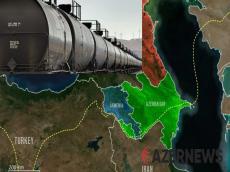
At a time when peace negotiations between Azerbaijan and Armenia are gaining momentum, recent signals of economic cooperation have drawn attention. Armenia’s economy minister announced that the two sides have already exchanged lists of goods that could be exported to one another. This development, though modest, reflects a new reality emerging after decades of hostility.
The history of conflict between these two South Caucasus states stretches back before their independence in 1991. Beginning in 1988, irredentist claims from Armenia triggered a war that culminated in the First Karabakh War, which ended in 1994. As a result, roughly 20 percent of Azerbaijan’s territory was occupied. The consequences were devastating: more than a million refugees and internally displaced persons, destroyed towns and villages, and the collapse of local industry and agriculture.
It is worth noting that the war brought suffering not only to Azerbaijan but to the entire South Caucasus region. For example, around 30,000 people from both sides lost their lives, and tens of thousands were wounded. The war also stunted the development of regional transit routes, limiting economic growth across the South Caucasus.
The long conflict inflicted severe damage on Armenia itself. Its economy weakened, and migration soared. Over the past three decades, a significant portion of Armenia’s population left the country, contributing to its status as one of the poorest states in the region.
The 44-day war in 2020 marked a turning point. Azerbaijan regained its territories in line with international law, and subsequent localized anti-terror operations restored full sovereignty. Although some political forces in Armenia attempted to revive a revanchist agenda, the country’s deep social and economic crisis undermined their efforts. Azerbaijan, with its strong military and stable economy, emerged in a position to push forward the peace process.
Yet peace cannot be built overnight. The trauma of more than 30 years of war will not simply vanish. What can help, however, is economic cooperation. Integration offers a practical path to reducing tensions and preventing renewed conflict. In recent months, small but meaningful steps have been taken. Azerbaijan has begun exporting fuel to Armenia. While the volume is limited, the symbolism is powerful: a small move for Azerbaijan, but a significant step for peace. Additionally, reports suggest that Azerbaijani aircraft have been using Armenian airspace, another sign of growing trust.
The preparation of export lists is a logical next step. Expanding trade ties will strengthen mutual confidence and reinforce the peace process. From a logistical perspective, cooperation with a neighboring state is more cost-effective than relying solely on distant markets. Azerbaijan, for instance, has a well-developed fruit and vegetable sector, with Russia as its primary market. Diversifying exports is a strategic goal, and Armenia could become an additional destination. Conversely, Armenia’s mountainous terrain makes livestock farming more prominent, and animal products could find a market in Azerbaijan.
The list of goods that could be exported is already extensive. However, the real issue is not simply about the exchange of products. The South Caucasus is a small but strategically vital region. It connects Russia to the north, Iran to the south, and Turkiye and Europe to the west. Stability here would transform the region into a dynamic transit hub, accelerating economic and social development.
Peace talks between Azerbaijan and Armenia have not yet produced a final agreement, but the steps toward economic cooperation are encouraging. Historical enmity and the scars of war cannot be erased instantly, yet economic interdependence can lay the foundation for lasting peace. The fact that both sides are now engaging not only at the diplomatic table but also in practical trade discussions suggests a genuine shift. If this process continues, the South Caucasus may enter a new era defined not by war but by cooperation.
Globally, states are dismantling barbed-wire borders and replacing them with flows of goods, services, and people. In such a context, maintaining mined fields and trenches along borders is neither sustainable nor profitable. The hope is that Armenia will demonstrate political will and seriousness in its commitments, ensuring that peace is not just discussed but achieved.