
The draft of the new Constitution of Armenia is due to be
published next week. The Armenian media write about it.
In particular, the opposition newspaper Zhokhovurd reports
that the reference to the Declaration of Independence of 1990 has been excluded
from the draft of the new Constitution.
The information spread after the board meeting of the ruling
party "Civil Contract". After the publication of the draft, public
hearings will be held in the country, then the document will be submitted to
the National Assembly.
According to the publication, in addition to changing the
preamble, the draft provides for the introduction of the institution of trial
by jury. The newspaper points out that this initiative has caused controversy
within the ruling team due to concerns about the impartiality of the jury in
the context of close social ties in society. Prime Minister Nikol Pashinyan
insisted on consolidating this rule.
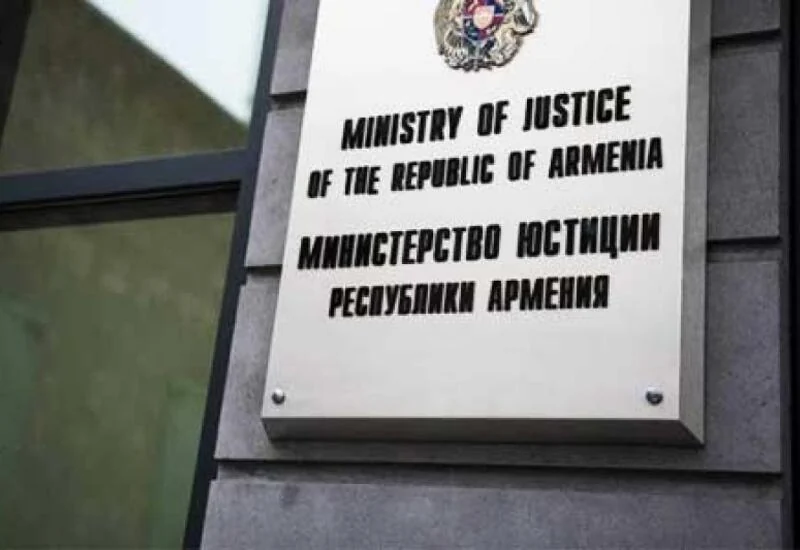
Earlier, Justice Minister Srbuhi Galyan said that the Constitutional Council was not ready to assume final responsibility for the content of the draft. The text will be officially submitted on behalf of the Ministry of Justice.
The day before, the head of the department told reporters
that after publication, the text of the new Constitution would still remain a
draft to be discussed with all public groups. According to her, more than 90
percent of the text of the new Constitution has already been discussed with the
Council for Constitutional Reforms of Armenia. Galyan suggested that the text
will be published before the end of November, possibly as early as the middle
of the month. However, public discussions are unlikely to be completed before
the end of the year, Galyan stressed.
If the newspaper's information is true and the draft of the
new Constitution of Armenia is submitted for discussion next week, this can
only be welcomed. A lot of time has already been lost due to the doubts and
whims of the Armenian side. Everything that is being done today should have
been started five years ago.
Although the opposition persistently calls the draft of the
new Constitution of Armenia "Aliyev's", the text itself, all changes
and accents were developed by the Armenian side independently and solely in the
interests of the Republic of Armenia. Azerbaijan did not demand anything, it
simply pointed out the obstacles to establishing lasting peace. And to
eliminate them or not to eliminate them - it depended only on Armenia itself.
Official Yerevan made a wise decision to listen to its neighbor. One could have
continued to be stubborn, claiming that Baku was wrong, that the Basic Law of
the country was innocence itself and the embodiment of peacefulness, that the
Declaration of Independence was just a piece of paper that had no force. At
first, Prime Minister Nikol Pashinyan tried to throw off this heavy burden of
responsibility for removing institutional obstacles to the signing of peace. At
the same time, Pashinyan really wants to sign the peace. There can be no doubt
about it. This means that he will have to take on this responsibility. He did
not draw up the Constitution, and he had nothing to do with the Declaration of
Independence either. Nevertheless, since 2018, the country has been living
according to these documents already under his rule, which means that he has to
make difficult decisions.
No one can force a sovereign state to change its Constitution. Baku did not force anyone to do anything. He doesn't care about the content of the Basic Law of Armenia. More precisely, there would be no case if it did not contain a constant threat of destabilization. No matter what the RA Constitutional Court decides, the preamble to the Constitution does contain direct and unambiguous claims on the territory of Azerbaijan and violates its territorial integrity. This is unacceptable and unthinkable in the civilized world. And Armenia undoubtedly considers itself one of them.
For the first time, Prime Minister Nikol Pashinyan
acknowledged the need to amend the Constitution when congratulating Armenians
on the 33rd anniversary of the Declaration of Independence in August 2023. The
congratulations turned out to be not very funny, because the Armenian prime
Minister admitted that after the 2020 war, the text of this document was
perceived by him in a completely different way than before. However, Pashinyan
tried to retouch the true meaning of the "fundamental principles of statehood"
mentioned in the Constitution, turning the arrows to the ghost of the USSR,
which, they say, is to blame for everything. Yes, Armenia received Azerbaijani
lands after Sovietization and continued to receive them piece by piece
throughout the seventy years of the Union's existence. Yes, the Karabakh
conflict also began at the end of the Soviet era. But it is based not on the
postulates of Marxism-Leninism, but on the principles of the nationalist
ideology of the Armenians. The Karabakh conflict and the occupation of
Azerbaijani territories were designed to bring to life the sick imagination of
Armenian ideologists, who drew fantastic maps and mythical grandeur for
Armenians.
Later, Nikol Pashinyan repeatedly stated that the new Basic
Law should not contain references to the 1990 Declaration. He argued that it
was necessary to close the topic of the "Karabakh movement" and move
on to a peaceful agenda, which, according to him, was supported by citizens in
the 2026 elections. Whether or not citizens will support the new Constitution,
only a referendum will show, if, of course, it can be held.
However, removing a toxic phrase from the preamble of the
Constitution alone will not solve the problem. Toxic myths should be removed
from the mentality of the Armenian society, from the ideological foundations of
the Armenian statehood. It's going to be much more difficult, but you have to
start somewhere.
Pashinyan is right when he says that the peace agenda is the
agenda of Armenia's independence. She will have independence only if real peace
comes.
In fact, it turns out that Azerbaijan, pointing to
unacceptable provisions in the fundamental documents of the Republic of
Armenia, cares about the independence of the neighboring country more than
those who loudly shout about saving the Armenian identity and statehood. The
revanchist opposition is doing everything with enviable tenacity to ensure that
Armenians have to dream of statehood for another three thousand years.
Revanchists block all important decisions where they can. Where this is not
possible, they stage demarches and defiantly turn their backs on measures that
can bring Armenia to the "people." So, on Thursday, November 12, the
opposition in full force ignored a meeting of the parliament, where a package
of bills on amendments to the law "On Joint Stock Companies" and
amendments to related laws were discussed and put to the vote. The government
linked the need to convene an extraordinary meeting with the Framework
Agreement on Strategic Cooperation between Armenia and the United States on the
"Trump's Route for International Peace and Prosperity" project,
ratified by the National Assembly on October 28. The opposition did not vote
this time either.
The new revanchist ideology is based on the suggestion to
the Armenian society that everything the authorities do is done on orders from
Baku, in the interests of Azerbaijan and in opposition to the national
interests of Armenia and the "historical aspirations" of the
Armenians. The road through Meghri, it turns out, does not meet these "aspirations".
We do not care about the "historical aspirations"
of the Armenians if they are not related to the interests and territories of
Azerbaijan. Unfortunately, the "historical aspirations" of the
Armenian people concern us directly. I wish that wasn't the case, but that's
the reality. The current authorities are trying their best to give society
other guidelines, and the revanchists are trying their best to prevent this. So
far, there is a tug of war.
The amendment of the Armenian Constitution should not take
place at the request of Azerbaijan, and the signing of a peace agreement should
exclude the imposition of new conditions by Baku, the head of the opposition
parliamentary faction "Strong Armenia" Narek Karapetyan said in
another comment to reporters. According to him, Pashinyan allows "the
enemy to write the Constitution." Karapetyan Jr. believes that the
Armenian society is not very outraged by the government's plans because it is
simply "insufficiently aware of Azerbaijan's position." That is, the
revanchist holds the Armenian society for a bunch of blockheads who do not read
the news and do not know how to read at all. To fill this gap, the opposition
launched a campaign to gain public support against the constitutional
amendments.
The revanchists are so afraid of constitutional changes that
they even agree to sign a peace treaty with Baku, but here and now. The
opposition, which has always opposed, today, through the mouth of Narek
Karapetyan, declares that the initialed text of the peace agreement does not
contain a requirement to amend the Constitution of Armenia and Yerevan should
seek to sign the document without new concessions.
But not so long ago, the revanchists were waving their
fists, demanding that Pashinyan not sign a peace treaty. Now, sensing that
Pashinyan is going to find support from the public and achieve a referendum on
constitutional reform, the opposition is rushing to sign peace in order to
prevent the correction of a historical mistake that, if not today, then
tomorrow, will cost Armenia dearly.
Although this has been said a thousand times, it would not
be superfluous to point out once again why the very one and only change that
Azerbaijan is talking about should be introduced into the Constitution of the
Republic of Armenia.
The preamble to the Constitution of the Republic of Armenia
states that "the Armenian people, based on the fundamental principles of
the Armenian statehood and national goals enshrined in the Declaration of
Independence of Armenia, which fulfilled the sacred covenant of its
freedom-loving ancestors ...", and so on. The text of the Constitution
itself does not mention Karabakh, but, as mentioned above, it is based on
national goals set out in the Declaration of Independence. Which, in turn,
reads: "The Supreme Council of the Armenian SSR, expressing the united
will of the Armenian people, realizing its responsibility to the fate of the
Armenian people in realizing the aspirations of all Armenians and restoring
historical justice <...>, based on the joint Resolution of the Supreme
Council of the Armenian SSR and the National Council of Nagorno-Karabakh of
December 1, 1989 "On the reunification of the Armenian SSR and
Nagorno-Karabakh", <...>, PROCLAIMS the beginning of the process of
establishing independent statehood."
Consequently, the Basic Law of the Republic of Armenia has
established as one of the main goals of the Armenian nation the appropriation
of the territories of a neighboring state. This fact, from a legal point of
view, invalidates Armenia's recognition of Azerbaijan's territorial integrity,
since territorial claims against its neighbor remain fixed at the legislative
level. This means that signing a peace treaty and submitting its text for
ratification would be contrary to the Basic Law of the country. A peace treaty
cannot be implemented without removing inappropriate provisions. The peace
treaty is a document of extreme importance. Its meaning is much broader than
the usual commercial agreement or memorandum of intent. This is a strategic agreement
that will determine the future of our two countries and the region as a whole.