As Azerbaijan pursues economic diversification, reducing reliance on oil revenues has emerged as a strategic imperative. Over the past decade, the government has prioritised the development of non-oil sectors, particularly manufacturing, agriculture and high-tech industries. Industrial parks have become the cornerstone of this transformation, providing the infrastructure, investment incentives and policy support necessary to attract domestic and foreign investors while fostering innovation and employment. However, the long-term effectiveness of this model will depend on whether industrial output and export competitiveness can be sustained as global market conditions evolve and fiscal incentives are gradually reduced.
On January 27, President Ilham Aliyev attended the inauguration of the Azermirror LLC mirror sheet production plant within the Sumgayit Industrial Park, underscoring the government’s commitment to expanding industrial capacities and non-oil exports. Minister of Economy Mikayil Jabbarov highlighted that 104 enterprises are now operational in Azerbaijan’s industrial zones, generating over 11,000 permanent jobs and producing goods worth 19.4 billion manats, with 6.1 billion manats exported to 70 countries. At the next stage, an additional 1.74 billion manats is expected to be invested in ongoing projects. While these figures demonstrate tangible progress, they also raise questions about productivity growth, value added per employee and the resilience of exports in the face of global demand fluctuations.
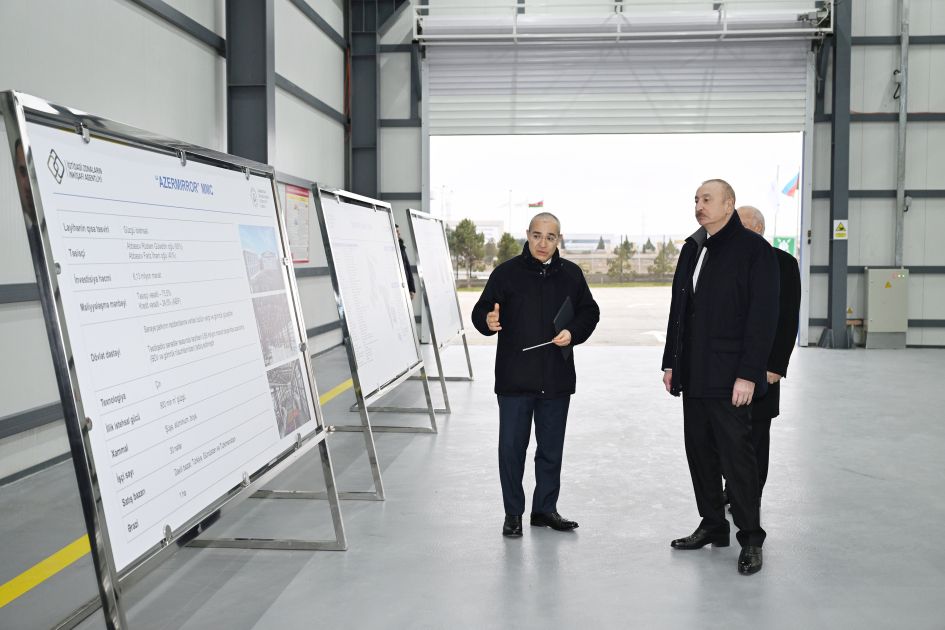
Industrial parks are not merely production hubs — they are strategic instruments of economic policy. By concentrating resources and infrastructure, these parks enhance production efficiency, enable technology transfer and encourage the manufacture of high-value, export-oriented products. This aligns with Azerbaijan’s broader non-oil sector development strategy, which seeks to maximise the use of natural and economic resources, attract advanced technologies and cultivate new industrial sectors. Yet, a key challenge remains ensuring that technology transfer translates into domestic capabilities rather than long-term dependence on imported equipment and foreign expertise.
Currently, Azerbaijan hosts eight operational industrial parks, including Sumgayit, Garadagh, Pirallahi, Mingachevir, Balakhani, Hajigabul, Agdam and Jabrayil. New parks are under development in Nakhchivan, Ganja and Shamkir, alongside industrial districts in Masalli, Neftchala, Sabirabad and Sharur. These facilities aim to stimulate regional economic development, attract foreign investment and create thousands of jobs outside the capital. At the same time, their success will hinge on the availability of skilled labour, efficient logistics links and consistent demand for industrial output beyond domestic markets.
The Sumgayit Industrial Park exemplifies the success of this model. With 40 active resident enterprises across 640 hectares, the park has attracted 5.5 billion manats in investment and currently provides employment to 6,135 people, with a projected total of 8,800 jobs upon completion of ongoing projects. Total sales of resident enterprises have reached 15.4 billion manats, including 5.7 billion manats in exports. Nevertheless, maintaining export momentum will require continuous upgrades in quality standards, energy efficiency and cost competitiveness, particularly as regional and global manufacturing competition intensifies.
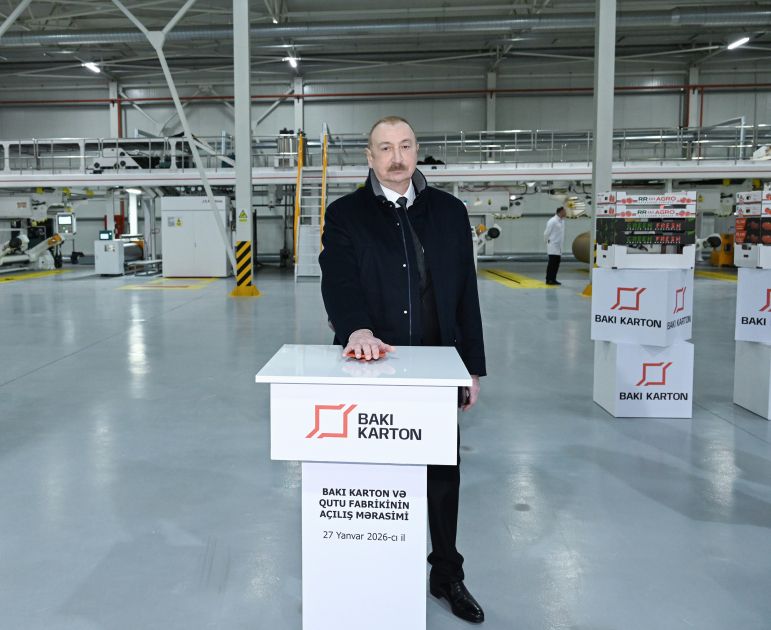
Foreign technologies play a critical role in this growth. The Azermirror LLC plant, built using Chinese technology, has an annual production capacity of 900,000 square metres of mirror sheets and employs 30 people. The project received a 1.5 million manat preferential loan and 600,000 manat in tax and customs exemptions, illustrating the effectiveness of state support mechanisms in catalysing high-tech production. However, such support also entails fiscal trade-offs, making it essential to assess long-term returns in terms of innovation, exports and workforce development. Similarly, the Baku Cardboard and Box Factory LLC, using Turkish and Chinese technologies, produces 55 million square metres of packaging annually. With 64 jobs created and an investment of 20 million manats, the enterprise demonstrates Azerbaijan’s strategy of integrating international expertise to modernise domestic production, while highlighting the need to scale employment and value creation alongside capital intensity.
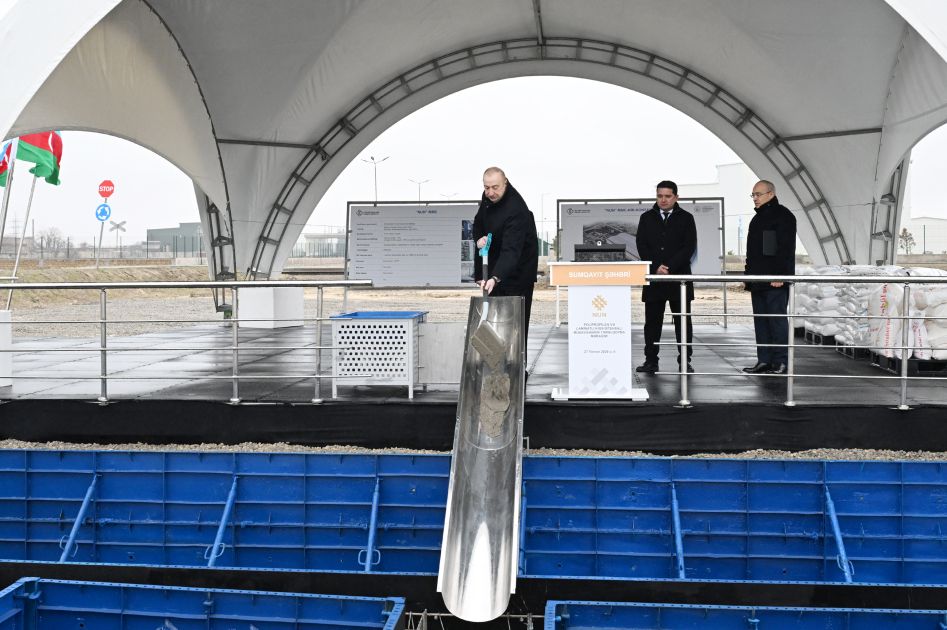
The upcoming Nun LLC polypropylene and laminated bag production facility will leverage German technology, reflecting Azerbaijan’s effort to diversify technology sources and reduce single-country dependence. With an investment of 11.2 million manats, 140 permanent jobs and preferential financing, the project reinforces the role of industrial parks as incubators for export-oriented manufacturing. Its success, however, will depend on access to raw materials, stable energy supply and sustained demand in international markets.
Azerbaijan’s industrial park policy is supported by extensive fiscal incentives. Residents benefit from 10-year exemptions from property, land and profit taxes, VAT and customs duty exemptions on imported machinery, and access to state-funded infrastructure, including gas, electricity, water, sewage systems, transport links and fibre-optic internet. While these measures significantly reduce entry barriers for investors, they also require careful calibration to ensure that public investment yields durable private-sector competitiveness rather than long-term subsidy dependence.
From an analytical perspective, several trends are evident:
Non-oil sector expansion: Industrial parks are proving effective in diversifying Azerbaijan’s economy, though their long-term success will depend on sustained productivity and export growth beyond state support mechanisms.
Foreign technology integration: Chinese, Turkish and German technologies are enabling rapid industrialisation, but the challenge lies in transforming technology access into domestic innovation capacity.
Job creation and regional development: Industrial parks are stimulating regional economies, although continued investment in skills training will be essential to support higher-value manufacturing.
Policy effectiveness: Strategic fiscal incentives have accelerated industrial growth, yet ongoing evaluation will be necessary to balance fiscal costs with economic returns.
Given all the above facts, this once again shows that Azerbaijan’s industrial parks are more than production facilities; they are strategic engines of economic modernisation. By leveraging foreign technology, incentivising investment and prioritising non-oil sector growth, Azerbaijan is laying the foundations for a more diversified and resilient economy. The integration of Chinese, Turkish and German technologies reflects a pragmatic approach to industrial development. The next phase will test whether this model can transition from state-led acceleration to self-sustaining, globally competitive industrial growth.

